Bitcoin Stalls as U.S.-Iran Peace Talks Collapse
Crypto markets remain in 'Fear' as the breakdown of the June interim deal and Hormuz blockades offset cooling inflation.
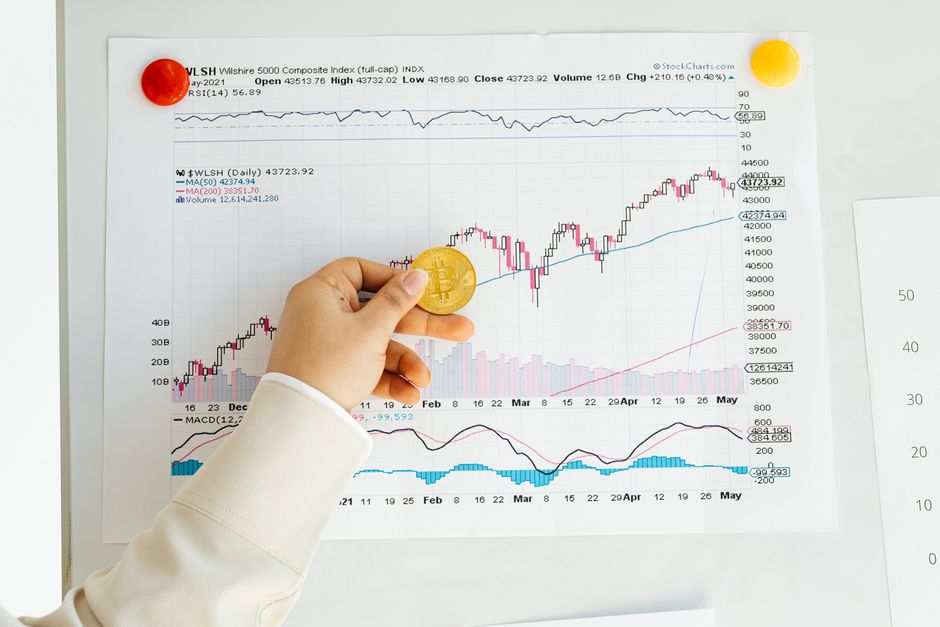
Photo: Pexels / https://kaboompics.com/
The global financial landscape is currently navigating a complex intersection of cooling macroeconomic indicators and intensifying geopolitical friction. While recent U.S. inflation data has provided a measure of relief to traditional equity markets, the cryptocurrency sector remains pinned within a restrictive trading range, unable to capitalize on the broader risk-on sentiment. This divergence is largely driven by the deteriorating security situation in the Middle East, where a fragile interim peace agreement between the United States and Iran has effectively collapsed. As diplomatic efforts reach a stalemate and naval blockades resume, the resulting pressure on energy markets is creating a persistent inflationary floor that complicates the Federal Reserve's path toward monetary easing. For Bitcoin, which has historically thrived on liquidity and low-interest-rate environments, the current environment of high-stakes brinkmanship and energy-driven uncertainty represents a significant headwind that has kept prices stagnant despite favorable domestic price indices.
Data Snapshot: Market Sentiment and Fear
According to proprietary market signals, the current sentiment in the digital asset space is characterized by significant caution. The Fear & Greed Index: 29 (Fear) at Fri Aug 14 2026 02:51:01 GMT+0000 (Coordinated Universal Time) reflects a market that is increasingly sensitive to downside risks rather than upside potential. This reading suggests that despite the lack of a major sell-off following recent geopolitical escalations, investors are hesitant to commit new capital, preferring a defensive posture as the conflict in the Gulf remains unresolved.
The Collapse of the June Interim Peace Accord
The primary driver of current market volatility is the rapid unraveling of the diplomatic framework established earlier this year. An interim deal agreed upon in June 2026, which initially declared an "immediate and permanent termination of military operations on all fronts," has proved to be short-lived businesstimes.com.sg globalbankingandfinance.com. The agreement began to disintegrate as early as July 7, when U.S. President Donald Trump declared the arrangement "over," followed by the Iranian foreign ministry officially suspending the deal a week later businesstimes.com.sg.
The core of the dispute centers on mutual accusations of non-compliance. Washington maintains that Tehran has failed to honor its commitment to reopen the Strait of Hormuz, a critical maritime artery that handled approximately 20% of the world’s oil and liquefied natural gas before the conflict began globalbankingandfinance.com gcaptain.com. Conversely, Iranian officials argue that the United States reneged on its promises to lift the blockade of Iranian ports and release frozen assets businesstimes.com.sg. A senior Iranian source recently confirmed that there has been "absolutely no progress" in talks to revive the interim deal or define a timeline for its implementation businesstimes.com.sg globalbankingandfinance.com.
The human and economic toll of this failure is substantial. Since the U.S. and Israel launched attacks on Iran on February 28, 2026, thousands of people have been killed, primarily in Iran and Lebanon businesstimes.com.sg. Iran has responded by striking U.S. assets and infrastructure across the region, including targets in Oman, Jordan, Kuwait, Israel, the UAE, and Saudi Arabia globalbankingandfinance.com. This cycle of violence has rendered the terms of the June accord effectively obsolete, leaving markets to price in a prolonged state of war gcaptain.com.
Strait of Hormuz: The Global Energy Chokepoint
Control over the Strait of Hormuz has become the central lever in the ongoing conflict. President Trump recently asserted that the U.S. has "total control" over the waterway, stating, "We own it" gcaptain.com. However, this claim is contested by the Persian Gulf Strait Authority, the body established by Iran to manage the passage, which insists the strait remains blocked and will not reopen until Iran's conditions are met businesstimes.com.sg. Hossein Taeb, the head of Iran's Basij paramilitary unit, reiterated that the strait is "under the management and control of the Islamic Republic" globalbankingandfinance.com.
The impact on global energy flows is stark. Shipping traffic through the strait has dropped to its lowest level in a week nexo.com. While some "shuttle transits" continue—often with vessels turning off their transponders to avoid detection—the overall volume is severely restricted gcaptain.com. Data from the European Union’s Sentinel 2 satellite recently identified twelve such transponder switches along a 100-kilometer stretch of the Omani and UAE coasts gcaptain.com. Despite these clandestine movements, U.S. Energy Secretary Chris Wright noted that the seven-day average for oil leaving the strait is approximately 9 million barrels a day, a figure that remains higher than many bearish trader estimates but significantly below pre-war capacity gcaptain.com.
The threat of an indefinite naval blockade by the U.S. has further heightened supply concerns. U.S. Treasury Secretary Scott Bessent recently warned of upcoming measures that would apply "economic isolation on a country" at a level never seen in history globalbankingandfinance.com. This aggressive stance was punctuated by a U.S. Navy helicopter firing Hellfire missiles to disable a Panama-flagged cargo ship that ignored warnings to stop violating the blockade globalbankingandfinance.com gcaptain.com.
Bitcoin's Resilience Amid Macroeconomic Crosscurrents
Against this backdrop of geopolitical instability, Bitcoin (BTC) has exhibited a notable degree of price stability, though it has struggled to break through key resistance levels. Following the release of the U.S. Consumer Price Index (CPI) data on August 12, which showed inflation easing to 3.4% in July, Bitcoin reclaimed the $64,000 level crypto.news. The headline CPI rose 0.1% month-over-month, matching market expectations and providing a brief relief rally for risk assets coinpaper.com nexo.com.
However, the gains were short-lived. Bitcoin's price action has remained largely confined to a band between $62,000 and $66,000 for several weeks nexo.com. Analysts observe that while the cooling inflation data removes the immediate threat of an inflation-led sell-off, it does not provide a decisive dovish catalyst crypto.news. The market's reaction to the CPI was described as "muted" compared to equities, which saw the S&P 500 and Nasdaq Composite rise by 0.87% and 0.94% respectively cointelegraph.com nexo.com.
The July Producer Price Index (PPI) further confirmed the cooling trend, remaining unchanged month-on-month at 0.2%, while the year-on-year increase of 4.7% was lower than the anticipated 4.9% cointelegraph.com. Despite these "benign" snapshots of inflation, Bitcoin has failed to hold above $64,000 for sustained periods, dropping back toward $63,800 following reports that the U.S.-Iran conflict could persist longer than previously hoped coinpaper.com.
Institutional Flows and Derivative Positioning
Institutional interest in Bitcoin appears to be in a state of "wait-and-see." U.S. spot Bitcoin ETFs recorded a modest $7.8 million in net inflows on Tuesday, August 11, with BlackRock’s IBIT attracting $50.2 million, which was largely offset by withdrawals from other products crypto.news. This follows a significant $144.6 million net outflow on Monday, suggesting that institutional investors are hesitant to increase exposure amid the current geopolitical uncertainty crypto.news.
In the derivatives market, traders are maintaining a defensive posture. Andrei Grachev, managing partner at DWF Labs, noted that downside protection near $60,000 remains more expensive than equivalent upside strikes near $70,000 for the end-August expiry crypto.news. This pricing gap indicates that while there is some demand for exposure to a potential rally, the prevailing sentiment is one of caution regarding the broader policy path and geopolitical risks crypto.news.
On-chain data provides some constructive signals, as major coins continue to move off exchanges, a pattern typically associated with accumulation rather than distribution nexo.com. However, indicators like the adjusted Net Unrealized Profit and Loss (NUPL) for long-term holders have moved deeper into negative territory, suggesting that investors who typically hold through volatility are currently carrying larger unrealized losses than the broader market coinpaper.com. This could signal a "bottoming process," though it does not yet confirm that the downward pressure has subsided coinpaper.com.
The Energy Channel and Inflationary Risks
The most significant threat to the current disinflationary trend—and by extension, Bitcoin's recovery—is the energy market. Brent crude futures have surged since the start of the war in February, hitting a peak of $126 a barrel, roughly 75% above pre-war levels businesstimes.com.sg globalbankingandfinance.com. While prices have recently steadied around $87 to $89 a barrel, they remain highly sensitive to news of shipping disruptions globalbankingandfinance.com crypto.news.
Analysts at Nexo highlight that the recent CPI data does not yet capture the most recent leg of the oil price increase nexo.com. If oil prices sustain their climb toward $90 or higher, it could show up forcefully in next month's inflation data, potentially forcing the Federal Reserve to maintain a more hawkish stance than the market currently expects nexo.com. Currently, the CME FedWatch Tool shows a 65.6% probability of the Fed holding rates at the 3.50-3.75% level in September, but these odds remain vulnerable to energy-driven inflation shocks cointelegraph.com.
The regional security concerns extend beyond the Strait of Hormuz. Recent attacks on vessels from the state-owned Abu Dhabi National Oil Company and a deadly Houthi attack on a cargo ship in the Bab el-Mandeb strait underscore the volatility of the entire Middle Eastern maritime corridor globalbankingandfinance.com globalbankingandfinance.com. These events maintain a risk premium on oil that acts as a counterweight to cooling demand forecasts from OPEC and the International Energy Agency globalbankingandfinance.com.
Altcoin Performance and Selective Risk-Taking
While Bitcoin remains stagnant, certain altcoins have shown selective strength. Dogecoin (DOGE) and BNB led gains among major assets recently, with DOGE rising 2.9% to trade above $0.07 and BNB advancing 2% to $614 crypto.news. Other assets like Chainlink (LINK) saw more significant jumps, advancing 3.8% to $8.71 crypto.news.
However, this performance is not uniform across the sector. Cardano (ADA) and Solana (SOL) have remained relatively flat or slightly weaker, reflecting a mixed appetite for risk crypto.news. XRP remains a focal point for many traders, as futures open interest has reached its highest level since October, even as the price hovers near the $1.00 psychological level nexo.com. This combination of high leverage and technical proximity to a key support level leaves XRP particularly exposed to any sudden shifts in market volatility nexo.com.
Conclusion: A Market in Suspension
The current state of the financial markets is one of uneasy equilibrium. On one side, cooling U.S. inflation data suggests that the worst of the domestic price pressures may be passing, offering a path toward eventual interest rate cuts. On the other, the collapse of diplomatic efforts in the Middle East and the resulting threat to global energy supplies create a persistent floor for inflation and a ceiling for risk-asset valuations. Bitcoin, caught in the middle of these opposing forces, continues to trade within a well-defined range, reflecting a market that has absorbed the current news cycle but lacks a clear catalyst for its next major move. As long as the Strait of Hormuz remains a flashpoint and the U.S.-Iran conflict continues without a clear path to de-escalation, the "Fear" sentiment reflected in current data is likely to persist, keeping investors cautious and liquidity constrained.
What We Don't Know
It remains unclear whether the reported "advanced stage" of talks between Iran and Oman regarding the reopening of the Strait of Hormuz will lead to a sustainable agreement, especially given the U.S. is not a direct party to these discussions gcaptain.com. Furthermore, the sources do not confirm if the recent "second early bull signal" in Bitcoin indicators will translate into a price recovery or if further capitulation is required to reach a definitive market bottom coinpaper.com. Finally, the long-term impact of the U.S. naval blockade on global oil prices remains speculative, as it depends on the effectiveness of Iranian "shuttle transits" and the potential for further military escalation in the region gcaptain.com.
Related
Bitcoin Stalls as U.S.-Iran Peace Talks Collapse
Aug 16, 2026
Macro vs. Geopolitics: Why Fed Policy Still Dominates Bitcoin
Apr 19, 2026

Bitcoin Dips Below $62K Amid Iran Tensions, Oil Surge, and Hawkish Fed Outlook
Jul 11, 2026
![[crypto] Bitcoin (BTC) Slides Under $62K as Iran Tensions Escalate and Oil Surges](/uploads/thumbnails/crypto-bitcoin-btc-slides-under-62k-as-iran-tensions-escalate-and-oil-surges-3.jpg)
[crypto] Bitcoin (BTC) Slides Under $62K as Iran Tensions Escalate and Oil Surges
Jul 11, 2026

US-Iran Geopolitics and Regulatory Crackdowns Shake Crypto Markets
May 8, 2026
Bitcoin Rebounds to $77K Amid Reports of U.S.-Iran Peace Deal
May 24, 2026
Source Articles
This article is based on analysis of 15 source articles from our news database.
- 1Globalbankingandfinance·Reuters·globalbankingandfinance.com·
- 2Whbl·Syndicated Content·whbl.com·
- 3Cointelegraph·Cointelegraph by William Suberg·cointelegraph.com·
- 4Bitcoinworld·Jayshree·bitcoinworld.co.in·
- 5Businesstimes·The Business Times·businesstimes.com.sg·
- 6Japantoday·By Parisa Hafezi and Elwely Elwelly·japantoday.com·
- 7Globalbankingandfinance·Reuters·globalbankingandfinance.com·
- 8Crypto·Lawrence Mondal·crypto.news·
- 9Coinpaper· Esther Chacha ·coinpaper.com·
- 10Nexo·Iliya Kalchev·nexo.com·
- 11Globalbankingandfinance·Reuters·globalbankingandfinance.com·
- 12Gcaptain·Bloomberg·gcaptain.com·
- 13Coincentral·Trader Edge·coincentral.com·
- 14Globalbankingandfinance·Reuters·globalbankingandfinance.com·
- 15Crypto·Olivia Stephanie·crypto.news·