The Institutionalization of Digital Dollars: OCC Signals a New Era for Community Banking
The landscape of American finance is undergoing a structural transformation as federal regulators begin to bridge the gap between traditional depository institutions and the burgeoning stablecoin market. The Office of the Comptroller of the Currency (OCC) has recently signaled a significant shift in policy by encouraging community banks to explore the role of stablecoin issuers thedefiant.io. This move represents a departure from previous cautionary stances, suggesting a strategic effort to integrate dollar-pegged digital assets into the regulated banking perimeter. However, the path to issuance remains strictly governed; while the OCC is fostering this exploration, applications for such activities have not yet officially opened, and any prospective issuer must secure explicit regulatory approval before commencing U.S. operations thedefiant.io.
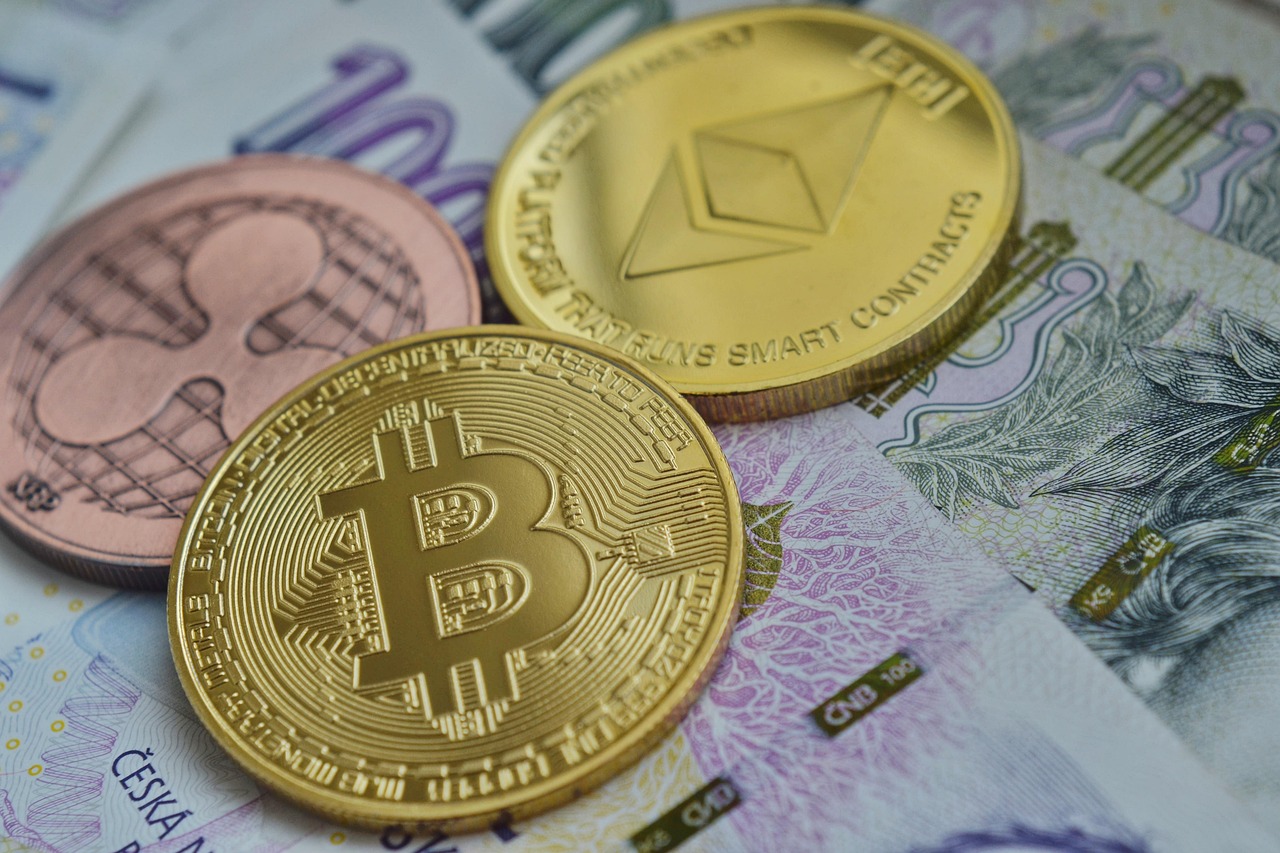
This regulatory evolution coincides with a broader trend of institutional validation for stablecoins. Ripple, a prominent player in the cross-border payment space, recently secured a critical milestone for its RLUSD stablecoin, obtaining final OCC Trust Bank approval for the management of its reserves and custody cryptonews.com. This approval provides a blueprint for how private entities can operate within federal oversight frameworks, ensuring that the underlying assets backing a stablecoin are held in a manner consistent with traditional banking safety and soundness standards. Furthermore, the RLUSD stablecoin has achieved a rating from Moody’s, a development that analysts observe could significantly enhance its appeal to risk-averse institutional participants cryptonews.com.
The Ripple Precedent: Trust Bank Approval and Reserve Management
The approval granted to Ripple for RLUSD reserve custody marks a pivotal moment in the convergence of decentralized finance (DeFi) and traditional finance (TradFi). By utilizing an OCC-regulated Trust Bank structure, Ripple is addressing one of the primary concerns of regulators: the transparency and security of the collateral backing digital dollars thedefiant.io. This structure ensures that reserves are not merely held but are subject to the rigorous auditing and capital requirements associated with federal banking charters. Analysts note that this move may serve as a template for the community banks the OCC is now encouraging to enter the space thedefiant.io.
Despite the progress of RLUSD, the broader Ripple ecosystem faces ongoing questions regarding value capture. While the stablecoin provides a regulated on-ramp for liquidity, the long-term utility and price trajectory of XRP remain subjects of intense market speculation cryptonews.com. Some market participants point to speculative forecasts, such as those generated by Elon Musk’s Grok AI, which has predicted significant price movements for XRP, though these remain purely algorithmic projections rather than guaranteed outcomes cryptonews.com. The tension between the regulated stability of RLUSD and the volatile nature of XRP highlights the dual-track development of the digital asset industry: one focused on compliance and utility, the other on speculative growth.
Tokenization Beyond Currency: Sony and the IP Revolution
The push for stablecoin issuance by community banks is only one facet of a larger movement toward the tokenization of real-world assets (RWA). Sony, through its Soneium project, is aggressively pursuing a strategy to tokenize intellectual property (IP) thedefiant.io. This initiative includes the development of a native token and the creation of royalty-backed vaults, which allow creators and investors to participate in the cash flows generated by creative works. Soneium’s roadmap also includes innovative financial products such as K-pop concert bonds, which leverage blockchain technology to provide transparent and efficient debt instruments for the entertainment industry thedefiant.io.
This trend toward tokenization is not going unnoticed by regulators. The Securities and Exchange Commission (SEC) has officially added tokenization to its 2027 examination priorities, signaling that the oversight of digital representations of traditional assets will be a primary focus for the remainder of the decade thedefiant.io. This regulatory scrutiny is essential as the market moves from simple currency tokens to complex financial instruments. For instance, the Soneium Portal already features Moriusa, a component of its tokenized-IP push, demonstrating that the infrastructure for these assets is already being deployed thedefiant.io.
The Anthropic IPO and the Rise of Synthetic Exposure
While banks and tech giants focus on tokenization, the traditional equity markets are seeing their own form of digital disruption. Anthropic, a leader in the artificial intelligence sector, has filed for an initial public offering (IPO) after reporting a staggering $1.63 billion in revenue for the first half of the year thedefiant.io. The company intends to list on the Nasdaq Global Select Market under the ticker "ANT" en.cryptonomist.ch. However, because the registration statement is not yet effective, actual shares cannot be sold to the public, creating a vacuum that the crypto-derivatives market has been quick to fill en.cryptonomist.ch.
Platforms like OKX and Trade.xyz have launched pre-IPO perpetual contracts and valuation bets, offering traders up to 10x leverage on Anthropic’s perceived value thedefiant.io thedefiant.io. These products are cash-settled and do not grant any ownership in Anthropic or any right to IPO allocations thedefiant.io. They represent a synthetic form of exposure that allows market participants to speculate on the company's $1.9 trillion implied valuation before the first share is ever traded on a public exchange thedefiant.io. This highlights a growing demand for "tokenized shares," even when the underlying issuer has not authorized such products thedefiant.io.
Direct Ownership vs. Indirect Exposure
The frenzy surrounding Anthropic underscores a critical distinction in modern investing: the difference between owning pre-IPO shares directly and holding interests in a fund. Direct trades can place a buyer on a company’s shareholder register, whereas fund interests offer only indirect exposure, often accompanied by separate fees and exit rules that an IPO may not automatically resolve thedefiant.io. As tokenization platforms attempt to bridge this gap, the lack of clear issuer identification or token contracts in some pitches—such as those seen on the Base network—remains a point of concern for analysts thedefiant.io.
AI and the Future of Machine-Driven Finance
The convergence of AI and blockchain is creating new paradigms for how value is created and distributed. The Justin Sun Prize, recently launched in collaboration with MathDB and Caltech Professor Tony Yue Yu, aims to incentivize mathematical discovery through a decentralized, machine-verifiable framework newsbtc.com. With prize pools reaching $1 million for solving fundamental problems like the Riemann Hypothesis or P versus NP, the initiative seeks to combine human insight with machine intelligence newsbtc.com.
This intersection is also manifesting in practical financial applications. Circle has reported that AI agents are now capable of approving their own spending increases using specialized agent wallets, a development that could revolutionize automated commerce thedefiant.io. As machines become economic actors, the need for stable, regulated, and programmable currency—such as the stablecoins the OCC is encouraging banks to issue—becomes even more acute thedefiant.io.
Conclusion: A Regulated Path Forward
The encouragement from the OCC for community banks to enter the stablecoin market is a landmark signal that digital assets are being integrated into the core of the U.S. financial system. By moving issuance into the hands of regulated banks, the OCC aims to provide a safer alternative to the unregulated or offshore stablecoins that have dominated the market to date. The success of Ripple’s RLUSD in securing trust bank approval and a Moody’s rating suggests that the infrastructure for this transition is already maturing. However, as the SEC’s focus on tokenization through 2027 indicates, the regulatory journey is far from over. Investors and institutions must navigate a landscape where synthetic exposure to high-value assets like Anthropic exists alongside new, regulated forms of digital IP and currency. The ultimate goal is a financial system where the efficiency of blockchain and the rigor of federal oversight work in tandem to drive the next generation of economic growth.
What We Don't Know
While the OCC has expressed encouragement, it remains unclear exactly when the application process for community bank stablecoin issuance will open or what the specific capital requirements will be thedefiant.io. Furthermore, the market has yet to see how the SEC will reconcile its 2027 tokenization priorities with the rapid proliferation of unauthorized "tokenized shares" and pre-IPO derivatives thedefiant.io thedefiant.io. Finally, the actual impact of RLUSD on the long-term value capture of the XRP token remains an open question that will likely only be answered as institutional adoption scales cryptonews.com.