Coldcard Entropy Failure: Analyzing the $88.6M Hardware Wallet Breach
A technical post-mortem on firmware vulnerabilities, market resilience, and the evolving risks of self-custody.
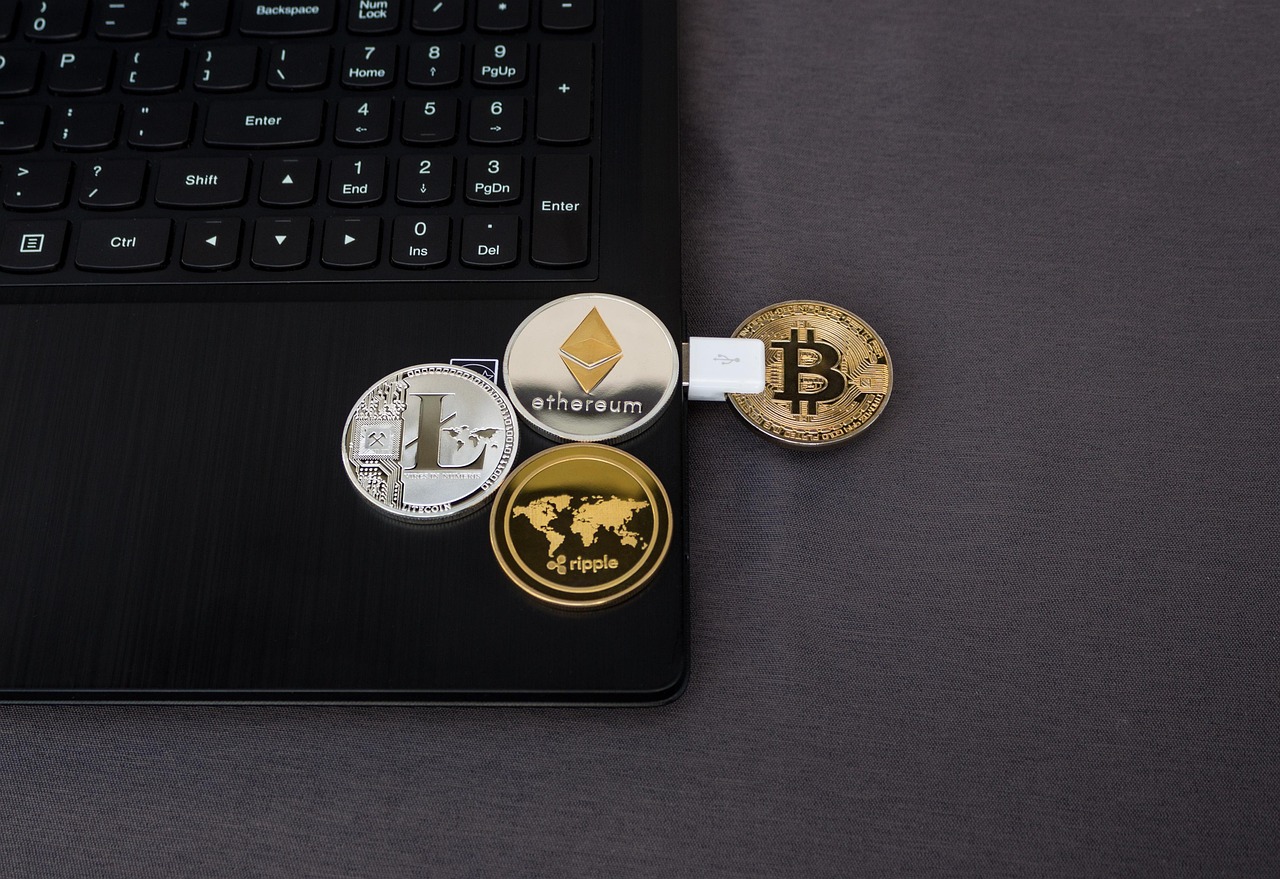
Photo: Pixabay / WorldSpectrum
The foundational promise of hardware wallets—that private keys are generated in a vacuum of absolute randomness and isolated from the vulnerabilities of the internet—faced a significant challenge in late July 2026. A technical failure in the seed-generation process of Coldcard devices, a long-standing favorite among Bitcoin maximalists for its air-gapped security model, resulted in the theft of tens of millions of dollars in digital assets thecurrencyanalytics.com. While the cryptocurrency market has historically been defined by exchange hacks and smart contract exploits, this incident strikes at the heart of the self-custody ethos, revealing that even the most reputable hardware can harbor silent flaws for years before they are exploited ambcrypto.com.
Data Snapshot: Market Sentiment and Price Action
As of August 2, 2026, the proprietary market signals for Bitcoin (BTC) reflect a complex divergence between price resilience and social sentiment. The latest BTC price is recorded at $63425.48, representing a 0.96% increase from the oldest recorded price in this data set of $62823.64. Despite this marginal price appreciation, sentiment indicators suggest significant underlying anxiety within the community. The average sentiment score stands at -0.121, with a median of -0.150. The VADER sentiment analysis, which aggregates data from 208 sources, shows a slightly negative reading of -0.012. These figures align with broader market observations that fear has overwhelmingly replaced optimism in the wake of the Coldcard exploit cryptopotato.com.
The Technical Anatomy of the Coldcard Entropy Failure
The vulnerability that led to the draining of thousands of wallets was not a traditional "hack" involving physical access or malware. Instead, it was a fundamental failure in the entropy—the randomness—used to generate the 12 or 24-word recovery phrases that serve as the master key for a Bitcoin wallet blockonomi.com. Security researchers and the manufacturer, Coinkite, traced the issue back to a firmware integration error introduced in March 2021 blockonomi.com. During a software library migration, the device's code began defaulting to a deterministic fallback generator within MicroPython rather than consistently utilizing the hardware-based True Random Number Generator (TRNG) thecurrencyanalytics.com.
This fallback mechanism relied on predictable variables, such as chip identifiers and timing data, which drastically narrowed the possible combinations for a generated seed blockonomi.com. In a standard BIP39 wallet, a 12-word phrase is intended to provide 128 bits of entropy, a number so large that brute-forcing it would take approximately 10^22 years—vastly longer than the age of the universe news.bitcoin.com. However, the Coldcard flaw downgraded the security of Mk3 devices to roughly 40 bits of effective entropy ambcrypto.com. Newer models, including the Mk4, Mk5, and Q, fared slightly better due to additional entropy from secure elements, but still only reached approximately 72 bits of search space, far below the 128-bit industry standard blockonomi.com.
With the search space reduced to 40 or 72 bits, attackers were able to use automated tools to reproduce candidate seeds offline and compare the resulting public addresses against funded addresses visible on the Bitcoin blockchain blockonomi.com. Once a match was found, the attacker could derive the private key and move the funds without ever needing to interact with the victim's physical device thecurrencyanalytics.com.
Quantifying the Loss: From $38 Million to $88.6 Million
Initial reports of the exploit suggested a significant but contained incident. Early estimates from AnchorWatch indicated that approximately 594 BTC, worth about $38 million, had been swept from 500 wallets in a 25-minute window thecurrencyanalytics.com cointelegraph.com. However, as blockchain forensics firms deepened their investigations, the scale of the theft expanded dramatically. Galaxy Research identified a coordinated 41-minute operation on July 30, 2026, that drained 1,082.65 BTC from 1,196 addresses thecurrencyanalytics.com.
By August 1, a third wave of attacks was identified, pushing the total estimated losses to 1,367.05 BTC, valued at approximately $88.6 million ambcrypto.com. This latest data suggests that 4,585 unique addresses have been impacted coinfomania.com. Analysts noted that the attacker's strategy appeared highly organized, prioritizing high-value targets—including one wallet containing $1.8 million—before sweeping smaller balances coinfomania.com. Furthermore, the stolen funds have remained largely unspent in the attacker's consolidation wallets, suggesting a preference for operational control over immediate liquidation ambcrypto.com.
The transactions themselves carried a distinct "fingerprint" that allowed researchers to trace the activity. Every theft transaction utilized an identical fee of 30 satoshis per virtual byte (sat/vB) and contained no change outputs cointelegraph.com. This uniformity suggests the use of a sophisticated, automated sweeping tool designed to outrun any potential user response cryptopotato.com.
Market Resilience and the Sentiment Crisis
Despite the severity of the security breach, Bitcoin's price has shown remarkable stability. While the asset dipped slightly to a two-week low of $62,369 during the initial panic, it quickly recovered to levels around $63,000 to $64,300 coinfomania.com thecurrencyanalytics.com. Analysts observe that this resilience suggests strong underlying market fundamentals and a belief among traders that the incident is a localized hardware failure rather than a systemic flaw in the Bitcoin protocol itself coinfomania.com.
However, the social sentiment data tells a different story. According to Santiment, Bitcoin's commentary ratio reached its lowest point since tracking began, with only 0.58 bullish comments for every bearish one cryptopotato.com. This level of fear has surpassed that seen during the collapses of FTX and Mt. Gox, likely because the Coldcard incident challenges the "gold standard" of self-custody cryptopotato.com. For many investors, the realization that a hardware wallet—the ultimate safety net—could fail at the point of creation has created a profound psychological shock cryptopotato.com.
Industry Response and the Multi-Wallet Debate
The fallout from the Coldcard exploit has prompted a re-evaluation of security practices across the industry. Binance founder Changpeng "CZ" Zhao the analysis points towarders to mitigate risk by splitting their funds across multiple independent wallets blockonomi.com. Zhao noted that "nothing is 100%" and that even long-established wallets can harbor bugs thecurrencyanalytics.com. While this approach reduces concentration risk, it also increases the complexity of managing multiple seeds and backups, which can lead to human error blockonomi.com.
Competitors in the hardware wallet space, such as Ledger and Trezor, were quick to distance themselves from the incident. Ledger clarified that its devices use a different, 256-bit entropy system and were not affected by the specific MicroPython flaw found in Coldcard's firmware ambcrypto.com. Trezor also assured its users that its code is entirely independent of the vulnerable Coldcard firmware ambcrypto.com.
Jack Mallers, CEO of Strike, issued an urgent call for Bitcoiners to review their custody setups, stating, "Don't assume you have time" coinfomania.com. Strike reported a significant surge in Bitcoin deposits as users moved funds away from potentially compromised Coldcard wallets and toward custodial or alternative self-custody solutions coinfomania.com. Mallers also advised victims to file reports with local authorities and retain all transaction records for potential future recovery efforts coinfomania.com.
Broader Security Context: A Record Year for Exploits
The Coldcard incident is part of a broader trend of escalating cyber threats in 2026. Reports indicate that the first half of the year was the most active period for crypto exploits on record, with $1.1 billion stolen across 212 incidents cryptopotato.com. Major protocol breaches, such as the $292 million KelpDAO exploit and the $285 million Drift Protocol hack, accounted for a significant portion of these losses cryptopotato.com. Interestingly, 94.4% of funds stolen from audited projects in H1 2026 were lost through attack paths that auditors never examined, highlighting a critical gap in current security review processes cryptonews.com.
Beyond the crypto-native space, traditional financial and healthcare sectors have also faced massive data breaches. CareCloud, a healthcare technology firm, confirmed a breach affecting 345,000 individuals, exposing Social Security numbers, bank account records, and detailed health information dailyhodl.com. Similarly, Werth Wealth Management reported a cyberattack that potentially exposed client names and Social Security numbers, though client funds remained untouched dailyhodl.com. These incidents underscore that the challenge of securing sensitive data is universal, spanning both decentralized and centralized infrastructures.
Emerging Threats: Address Poisoning and Supply-Chain Attacks
As hardware security is challenged, social-engineering and frontend attacks are also evolving. "Address poisoning" has become a routine threat, particularly on networks with low transaction fees like Base and Optimism cryptodaily.co.uk. In these attacks, malicious actors send zero-value transactions to a user's wallet from a "vanity address" that shares the same starting and ending characters as a frequent counterparty cryptodaily.co.uk. Users who habitually copy addresses from their transaction history may inadvertently send funds to the attacker's lookalike address cryptodaily.co.uk. A research paper found that address-poisoning campaigns account for 53% of non-reverted "state-invariant" transactions on the Ethereum mainnet cryptodaily.co.uk.
Furthermore, a silent supply-chain attack recently hit the advertising technology provider Adform coinidol.com. Attackers injected malicious code into a shared resource file that could stealthily alter cryptocurrency transfer destinations in a user's browser coinidol.com. If a user attempted to transfer BTC, ETH, or TRON, the script would replace the intended destination with an attacker-controlled address coinidol.com. This incident highlights the growing risk of browser-side vulnerabilities that bypass protocol-level security coinidol.com.
Remediation and the Path Forward for Coldcard Users
For users of Coldcard, the path to security is clear but labor-intensive. Coinkite has released emergency firmware updates (version 4.2.0 for Mk3, 5.6.0 for Mk4/Mk5, and 1.5.0Q for the Coldcard Q) that remove the vulnerable software fallback path dailyhodl.com. However, a firmware update alone does not secure an existing seed that was generated under the flawed entropy conditions thecurrencyanalytics.com.
Affected users must generate an entirely new recovery phrase on the patched firmware and migrate their funds to the new addresses dailyhodl.com. Security experts recommend that users who want to ensure absolute randomness should use physical dice rolls (at least 50 rolls) to generate their seeds, as this bypasses the device's internal entropy generation entirely blockonomi.com. Additionally, the use of a strong BIP39 passphrase adds a critical layer of protection that can mitigate the risks of a compromised base seed blockonomi.com.
The Coldcard incident serves as a stark reminder that self-custody is not a "set-and-forget" solution. It requires ongoing vigilance, regular firmware updates, and a willingness to adapt to emerging threats thecurrencyanalytics.com. As the industry moves forward, the focus will likely shift toward more robust multi-signature setups and independent entropy verification to ensure that the "gold standard" of security remains untarnished blockonomi.com.
What We Don't Know
While the technical cause of the Coldcard entropy failure has been identified, the identity of the attacker and the full extent of the compromised but not-yet-drained wallets remain unknown. It is also unclear whether the attacker intends to liquidate the stolen 1,367 BTC or if they will attempt to move the funds through mixers and cross-chain bridges to obscure the trail. Finally, the long-term impact on Coldcard's market share and the broader adoption of hardware wallets in the face of this sentiment crisis has yet to be fully realized.
Related

Coldcard Firmware Flaw Triggers Record Bitcoin Fear and $89M Loss
Aug 6, 2026
Coldcard Firmware Flaw Leads to $100M Bitcoin Theft
Aug 5, 2026

Crypto Coinflip-Style Hardware Hack: $70 Million Drained from Wallets
Aug 2, 2026
Coldcard Firmware Flaw Triggers Record Bitcoin Fear and $89M Loss
Aug 6, 2026
Crypto Coinflip-Style Hardware Hack: $70 Million Drained from Wallets
Aug 2, 2026
Retail Holds 66% of Bitcoin Supply as Security Flaws Shake Self-Custody
Aug 5, 2026
Source Articles
This article is based on analysis of 28 source articles from our news database.
- 1Coinfomania·Emmmaculate Araka·coinfomania.com·
- 2AMBCrypto·Muriuki Lazaro·ambcrypto.com·
- 3Bitcoin.com·Shiraz Jagati·news.bitcoin.com·
- 4AMBCrypto·Benjamin Njiri·ambcrypto.com·
- 5Blockonomi·Brenda Mary·blockonomi.com·
- 6Blockonomi·Brenda Mary·blockonomi.com·
- 7Coinfomania·Ayantan Maity·coinfomania.com·
- 8Blockonomi·Brenda Mary·blockonomi.com·
- 9CryptoPotato·Wayne Jones·cryptopotato.com·
- 10Coinfomania·Kanishka Bothra·coinfomania.com·
- 11Dailyhodl·Daily Hodl Agent·dailyhodl.com·
- 12The Currency Analytics·The Currency Analytics·thecurrencyanalytics.com·
- 13Dailyhodl·Daily Hodl Agent·dailyhodl.com·
- 14CryptoPotato·Jordan Lyanchev·cryptopotato.com·
- 15Coin Idol·Tomas Duda·coinidol.com·
- 16Crypto Daily·Karim Daniels·cryptodaily.co.uk·
- 17Blockonomi·Brenda Mary·blockonomi.com·
- 18The Currency Analytics·The Currency Analytics·thecurrencyanalytics.com·
- 19Cointelegraph·Cointelegraph by Helen Partz·cointelegraph.com·
- 20Dailyhodl·Daily Hodl Agent·dailyhodl.com·
- 21CryptoNews·Ahmed Barakat·cryptonews.com·
- 22The Currency Analytics·The Currency Analytics·thecurrencyanalytics.com·
- 23Dailyhodl·Daily Hodl Staff·dailyhodl.com·
- 24Coinfomania·Shweta Chakrawarty·coinfomania.com·
- 25Coinfomania·Aritra Sarkar·coinfomania.com·
- 26AMBCrypto·Adewale Olarinde·ambcrypto.com·
- 27Coinfomania·Khushi Thakur·coinfomania.com·
- 28Coinfomania·Kanishka Bothra·coinfomania.com·