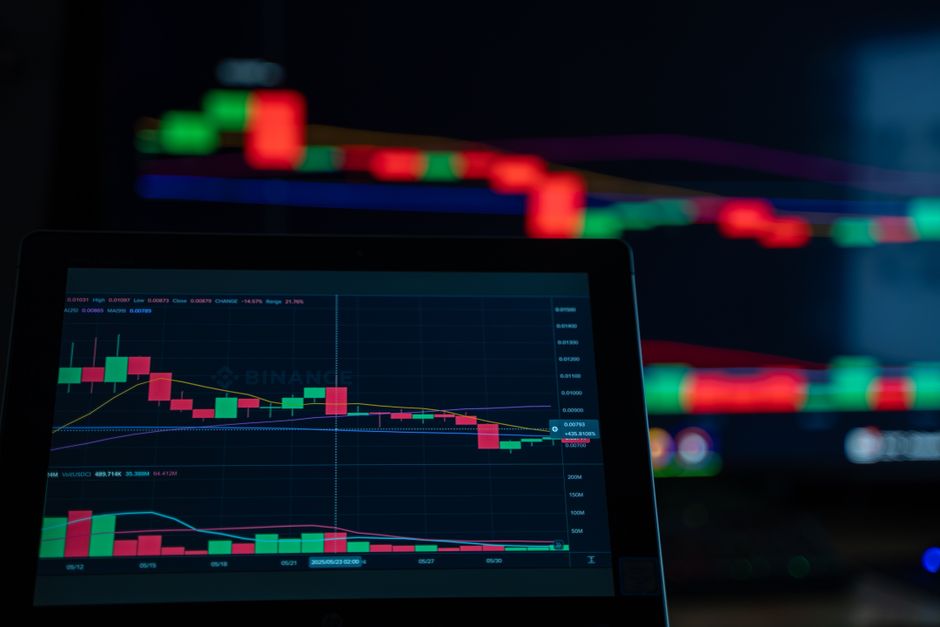
The final week of June 2026 has emerged as a critical stress test for the digital asset ecosystem, characterized by a tightening correlation between Bitcoin and the semiconductor-led AI trade, a deepening crisis in corporate Bitcoin treasury structures, and a significant shift in the regulatory landscape for frontier AI models. As Bitcoin lingered below the $60,000 threshold, the market witnessed a rare divergence where traditional hedges like gold and silver sold off alongside risk assets, leaving investors to grapple with a "dollar-up, liquidity-down" regime cryptodaily.co.uk. This period marks a transition from speculative euphoria to a more disciplined, data-driven environment where the mechanics of capital structures and the physical constraints of AI infrastructure are now the primary drivers of price action.
The Digital Gold Stress Test: Macro Realities vs. Safe-Haven Narratives
The narrative of Bitcoin as "digital gold" faced a severe challenge as both the cryptocurrency and precious metals markets experienced simultaneous drawdowns. On June 25, 2026, spot gold slipped below $4,000 per troy ounce, hitting a seven-month low, while silver traded in the mid-$50s, more than 50% off its January peak cryptodaily.co.uk. This synchronized sell-off was driven by a strengthening U.S. dollar and hawkish Federal Reserve expectations, which increased the carry cost of non-yielding assets cryptodaily.co.uk.
Bitcoin's behavior during this window suggested it currently functions more as a high-beta liquidity play than a sovereign hedge. When the dollar rips, institutional "big books" tend to raise cash by selling their most liquid expressions of duration and beta, which includes gold futures and spot Bitcoin ETFs cryptodaily.co.uk. The on-chain data reflects this pain: after Bitcoin dipped below approximately $59,100 on June 25, Glassnode data indicated that total supply in loss reached a record 10.83 million BTC, meaning more than half of the circulating supply was underwater cryptodaily.co.uk.
The ETF landscape further illustrates this de-risking trend. From mid-May into early June, U.S. spot Bitcoin ETFs experienced 13 consecutive sessions of outflows, losing roughly $4.37 billion and bringing total ETF assets down from $104.29 billion to approximately $82.8 billion cryptodaily.co.uk. This suggests that while ETFs provide a convenient vehicle for institutional entry, they also serve as an easy exit point during periods of macro uncertainty cryptodaily.co.uk.
The Strategy Crisis: mNAV Compression and the Accretion Channel
Perhaps the most significant structural development of the week was the compression of Strategy's enterprise market-to-NAV (mNAV) ratio. On June 25, 2026, the company's enterprise mNAV crossed below 1.0 for the first time, signaling that the combined value of its debt, preferred stock, and equity exceeded the market value of its 847,363-bitcoin treasury thedefiant.io. This is a critical threshold because Strategy's model relies on issuing equity at a premium to NAV to buy more Bitcoin; when the ratio falls below 1, this "accretion channel" effectively closes thedefiant.io.
The company's flagship preferred stock, known as Stretch (STRC), hit record lows of $71.25, trading at a nearly 25% discount to its $100 par value decrypt.co. This decline has pushed the effective yield for new investors to roughly 15-16%, as the market demands a higher risk premium for exposure to Strategy's capital structure thedefiant.io. Despite this pressure, Strategy executives have issued coordinated reassurances, emphasizing that their balance sheet is "indestructible" because the debt is structured against the equity stack rather than being collateralized by Bitcoin directly, preventing forced liquidations thedefiant.io.
However, the costs of maintaining this structure are ballooning. Preferred dividend obligations reached $229.5 million in Q1 2026 alone, and the company has raised over $13.5 billion in preferred equity since early 2025 thedefiant.io. Analysts suggest that if the mNAV remains below 1, the company may eventually be forced to sell Bitcoin to cover recurring costs if other capital sources dry up thedefiant.io.
The AI-Crypto Nexus: Semiconductors as a Lead Indicator
A new correlation regime has solidified in 2026: the tethering of Bitcoin to the semiconductor-led AI trade. When the Philadelphia Semiconductor Index (SOX) experiences sharp drawdowns, Bitcoin often follows within hours cryptodaily.co.uk. On June 5, 2026, the SOX index fell 10.3%, wiping out $1.3 trillion in market value, which coincided with Bitcoin sliding to $62,715 and a period of sustained ETF outflows cryptodaily.co.uk.
This linkage is driven by three primary channels:
- Risk Channel: Funds de-gross high-beta trades across both tech and crypto when semiconductor multiples are questioned cryptodaily.co.uk.
- ETF Flow Channel: Mainstream capital uses Bitcoin ETFs as a liquidity valve, redeeming shares when broader tech sentiment sours cryptodaily.co.uk.
- Systematic De-grossing: Volatility spikes in mega-cap equities trigger CTAs and vol-control funds to reduce exposure across all correlated assets cryptodaily.co.uk.
The "physical AI" trade is also reshaping the semiconductor landscape. On June 25, onsemi announced a $7 billion all-stock acquisition of Synaptics, a move designed to pivot AI exposure toward the "edge"—sensors, low-power inference, and connectivity cryptodaily.co.uk. This shift highlights that the next leg of AI growth may move away from the cloud and into real-world devices, a transition that carries higher execution risk and longer timelines than software-based AI cryptodaily.co.uk.
Regulatory Intervention: The Trump Administration and Frontier AI
The regulatory environment for artificial intelligence took a dramatic turn this week as the Trump administration intervened in the rollout of several frontier AI models. On June 26, 2026, OpenAI unveiled its GPT-5.6 family (Sol, Terra, and Luna) but was asked by federal officials to limit the initial release to a small group of trusted partners while the government evaluates the models under a new federal framework decrypt.co.
This follows a similar order given to Anthropic, which was compelled to suspend public access to its Claude Fable 5 and Mythos 5 models earlier this month over national security concerns decrypt.co. The administration's focus appears to be on GPT-5.6's advanced capabilities in coding, biology, and cybersecurity, which officials fear could be misused for offensive cyberattacks or biological weapons research decrypt.co decrypt.co.
Despite these restrictions, OpenAI reported that GPT-5.6 Sol achieved the highest score on TerminalBench for command-line software engineering tasks, outperforming its predecessor GPT-5.5 and competitors like Claude Mythos 5 decrypt.co. The administration's intervention marks a shift toward a voluntary testing framework for advanced AI systems, testing the balance between innovation and national security decrypt.co.
Hardware Constraints: The Memory-Cost Shock
The rapid expansion of AI data centers has created a massive supply-demand imbalance in the memory market, leading to significant price hikes for consumer electronics. Apple, a company known for its scale-efficiency, was forced to raise prices across its Mac and iPad lines on June 25, 2026, to offset soaring costs for DRAM and NAND flash memory cryptodaily.co.uk.
The price increases were substantial: the MacBook Air rose by $200 (18.2%), and the iPad Pro increased by $200 (20.0%) cryptodaily.co.uk. Apple's stock fell 5-6% intraday following the announcement, as investors worried about the impact of higher prices on consumer demand cryptodaily.co.uk. TrendForce reported that conventional DRAM contract prices surged nearly 100% quarter-over-quarter in Q1 2026, driven by AI server buyers who are currently being prioritized by memory manufacturers cryptodaily.co.uk.
This "memory-cost shock" is also testing U.S. trade restrictions. Apple has reportedly requested approval from the White House to purchase memory chips from ChangXin Memory Technologies (CXMT), China's largest DRAM producer cryptopolitan.com. However, CXMT is listed by the Pentagon as a "military Chinese company," complicating Apple's efforts to diversify its supply chain and reduce its exposure to rising component costs cryptopolitan.com.
The Cybersecurity Rotation: Fortinet and the Anti-AI-Bubble Trade
As enthusiasm for pure-play AI stocks wobbles, capital is rotating toward cybersecurity as a more stable way to play the AI wave. UBS has pegged the 2026 addressable market for security and safety at roughly $974 billion, rising to $1.19 trillion by 2029 cryptodaily.co.uk.
Fortinet has emerged as a key player in this rotation, recently launching FortiSOC, a cloud-delivered platform that embeds "agentic AI" to automate security operations cryptodaily.co.uk. Unlike experimental AI projects, cybersecurity spending is often mandatory for corporations, driven by regulatory frameworks and the increasing risk surface created by AI adoption itself cryptodaily.co.uk. Sector leaders like Palo Alto Networks and CrowdStrike have also shown strong momentum, with Palo Alto printing $3.0 billion in revenue for fiscal Q3 2026, up 31% year-over-year cryptodaily.co.uk.
Quantum Computing: The 2028 Deadline
The quantum computing sector received a significant boost from two new U.S. executive orders signed by President Trump on June 22, 2026. The orders set a "moonshot" goal of standing up a "scientifically relevant" quantum computer by 2028 and accelerating the federal migration to post-quantum cryptography (PQC) by the early 2030s cryptodaily.co.uk.
This clear deadline has shifted the handicap for quantum tickers like IonQ, Rigetti, and D-Wave. Following the announcement, Rigetti shares pushed to $22.65 and D-Wave to $26.30 in after-hours trading cryptodaily.co.uk. The sector also saw a major valuation reset with the June 2026 IPO of Quantinuum, which raised $1.68 billion at a $60 per share price, providing a fresh public benchmark for the industry cryptodaily.co.uk.
Meme-Stock Capital and the eBay Takeover
In the retail sector, GameStop continues its aggressive pursuit of a $56 billion takeover of eBay, despite initial rejections from the e-commerce giant's board cryptopolitan.com. GameStop's latest SEC filings reveal it may beneficially own about 39.9 million eBay shares (roughly 9%), combining direct holdings and economic exposure via derivatives cryptodaily.co.uk.
GameStop CEO Ryan Cohen has argued that the merger would create a formidable competitor to Amazon, projecting $2 billion in annual synergies cryptopolitan.com. To bolster its credibility as a buyer, GameStop guided to a 2026 Adjusted EBITDA of over $600 million, nearly double its 2025 figure cryptodaily.co.uk. However, credit agencies like Moody's have warned that the deal could significantly increase eBay's leverage and negatively impact its credit metrics cryptopolitan.com.
Conclusion: Navigating the Liquidity Squeeze
The final week of June 2026 has demonstrated that the digital asset and AI sectors are no longer operating in isolation from the broader macro environment. The convergence of rising component costs, regulatory interventions, and the stress-testing of corporate Bitcoin treasuries has created a complex landscape for investors. While the long-term potential of AI and blockchain remains intact, the immediate focus has shifted to liquidity management, capital structure resilience, and the physical constraints of the technology stack. As we move into July, the market will likely continue to prioritize companies with clear earnings visibility and sustainable funding models over those relying on speculative momentum.
What We Don't Know
It remains unclear whether the Trump administration's "limited preview" for GPT-5.6 will become a permanent fixture of the AI rollout process or if it is a temporary measure during the framework's development. Additionally, the sources do not confirm if Strategy will be forced to sell Bitcoin to maintain its preferred dividend payments if the mNAV ratio remains below 1.0 for an extended period. Finally, the ultimate success of GameStop's unsolicited bid for eBay hinges on financing details that have yet to be fully disclosed to the public.

![[crypto] Bitcoin Is in a Fight at $60K—Here's What the Charts Say](/uploads/thumbnails/crypto-bitcoin-is-in-a-fight-at-60k-here-s-what-the-charts-say.jpg)