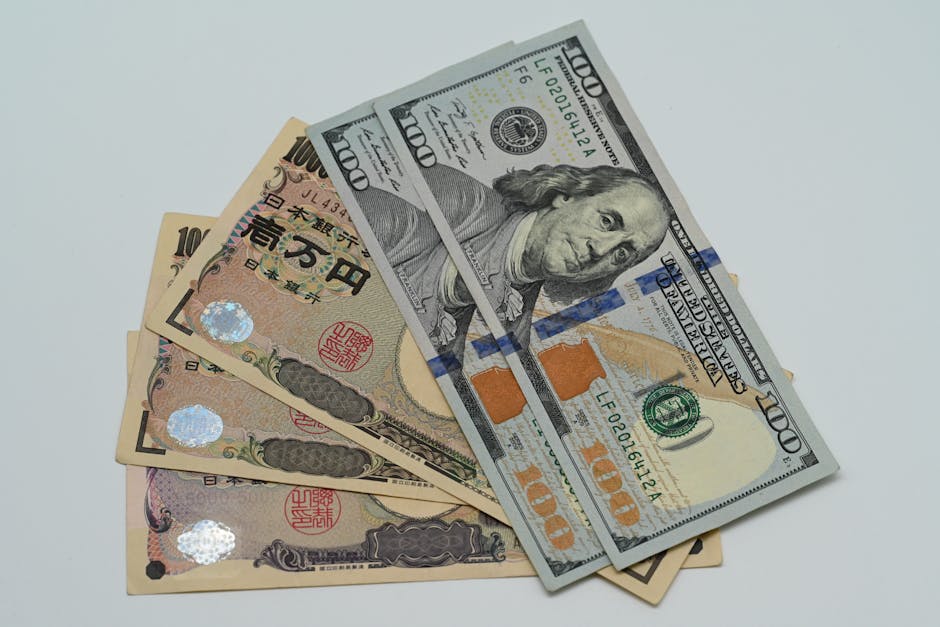
The global financial landscape is currently navigating a period of intense volatility as the Japanese yen experiences a dramatic reversal, surging 2% against the US dollar in a single session [https://cryptobriefing.com/yen-surges-carry-trade-crypto-risk/]. This movement, characterized by analysts as a seismic jolt to foreign exchange markets, has been fueled by intense speculation regarding direct intervention by Japan’s Ministry of Finance [https://cryptobriefing.com/yen-surges-carry-trade-crypto-risk/]. For the cryptocurrency sector, this shift represents more than just a currency fluctuation; it is a flashing warning sign that the yen carry trade—a primary engine of global liquidity for risk assets—may be entering a phase of rapid and potentially destabilizing unwinding [https://cryptobriefing.com/yen-surges-carry-trade-crypto-risk/]. As the yen strengthens, the cost of maintaining leveraged positions in assets like Bitcoin and Ethereum rises, creating a cascade of risk that extends from Tokyo to the decentralized markets of the digital age [https://cryptobriefing.com/yen-surges-carry-trade-crypto-risk/].
The Coordinated Strike on Dollar Dominance
On July 30, 2026, the foreign exchange market witnessed a rare and significant event: a coordinated intervention by Japan and South Korea to stabilize their respective currencies against a stubbornly strong US dollar [https://cryptobriefing.com/japan-korea-joint-intervention-yen-won/]. This joint action, the first of its kind since the aftermath of the Tohoku earthquake in 2011, saw Japan’s Ministry of Finance buying yen while South Korean authorities sold dollars to prop up the won [https://cryptobriefing.com/japan-korea-joint-intervention-yen-won/]. The timing of the intervention was strategically chosen to coincide with New York trading hours, a move designed to maximize impact when dollar liquidity is at its deepest [https://cryptobriefing.com/japan-korea-joint-intervention-yen-won/].
The results of this tag-team effort were immediate. The yen jumped more than 3% intraday, reaching approximately 157.8 per dollar—its strongest single-day performance in nearly two years [https://cryptobriefing.com/japan-korea-joint-intervention-yen-won/]. Simultaneously, the South Korean won climbed about 2%, hitting a nine-month high [https://cryptobriefing.com/japan-korea-joint-intervention-yen-won/]. This intervention follows a period where the yen had been trading at 40-year lows, specifically between 162.3 and 162.9 per dollar in late July [https://cryptobriefing.com/yen-surges-carry-trade-crypto-risk/]. The scale of Japan's commitment to defending its currency is underscored by the fact that it had already deployed approximately 11.73 trillion yen (roughly $73 billion) in intervention funds during April and May of 2026 alone [https://cryptobriefing.com/yen-surges-carry-trade-crypto-risk/].
The necessity of bringing South Korea into the fold suggests that solo efforts by Tokyo were no longer sufficient to arrest the currency's slide [https://cryptobriefing.com/japan-korea-joint-intervention-yen-won/]. Furthermore, reports indicate the move benefited from tacit support linked to US Federal Reserve rate checks, suggesting a broader international consensus on the need for currency stabilization [https://cryptobriefing.com/japan-korea-joint-intervention-yen-won/]. While the Bank of Japan (BOJ) held its interest rate steady at 1% on July 31, the accompanying policy statement signaled that further rate hikes remain a possibility due to persistent inflationary pressures [https://cryptobriefing.com/japan-korea-joint-intervention-yen-won/].
The Anatomy of the Yen Carry Trade Unwind
The yen carry trade has functioned as one of the most critical macroeconomic forces for the cryptocurrency market over the past two years [https://cryptobriefing.com/japan-korea-joint-intervention-yen-won/]. The mechanics of this trade involve investors borrowing yen at Japan's historically low interest rates, converting those funds into dollars, and then deploying that capital into higher-yielding assets, including stocks, bonds, and digital assets like Bitcoin [https://cryptobriefing.com/yen-surges-carry-trade-crypto-risk/]. This "river of cheap Japanese capital" has provided significant tailwinds for the crypto ecosystem [https://cryptobriefing.com/yen-surges-carry-trade-crypto-risk/].
However, the math of these leveraged positions changes fundamentally when the yen strengthens or Japanese interest rates rise [https://cryptobriefing.com/yen-surges-carry-trade-crypto-risk/]. The BOJ's decision to raise its policy rate to approximately 1% in June 2026 represented a meaningful tightening for a central bank that had spent decades near zero [https://cryptobriefing.com/yen-surges-carry-trade-crypto-risk/]. When the funding currency (the yen) becomes more expensive, carry trade investors face a double hit: their borrowing costs increase, and the value of the yen they must eventually pay back rises relative to the assets they purchased [https://cryptobriefing.com/yen-surges-carry-trade-crypto-risk/].
The current risk is exacerbated by the sheer volume of bearish bets against the yen, which reportedly exceed $11.65 billion [https://cryptobriefing.com/japan-korea-joint-intervention-yen-won/]. Any forced unwinding of these positions could trigger a cascade of capital outflows from risk assets [https://cryptobriefing.com/japan-korea-joint-intervention-yen-won/]. Historical data provides a sobering precedent: BOJ rate hikes since 2024 have corresponded with Bitcoin drawdowns averaging roughly 27% [https://cryptobriefing.com/yen-surges-carry-trade-crypto-risk/]. The memory of August 2024 remains fresh for institutional traders, when a modest BOJ rate adjustment triggered a violent carry trade unwind that temporarily crashed the Bitcoin market [https://cryptobriefing.com/japan-korea-joint-intervention-yen-won/] [https://cryptobriefing.com/yen-surges-carry-trade-crypto-risk/].
Emerging Market Fragility: The Rupee and the Won
The pressure on Asian currencies is not limited to Japan and South Korea. The Reserve Bank of India (RBI) recently conducted one of its largest direct currency defenses in months, selling $7 billion to support the rupee [https://cryptobriefing.com/rbi-sells-7b-defend-rupee-intervention/]. The intervention, which took place over July 24-25, 2026, was prompted by the rupee hovering near record lows of 97 against the US dollar [https://cryptobriefing.com/rbi-sells-7b-defend-rupee-intervention/]. The Indian currency had already weakened by approximately 2% in July alone before the RBI stepped in [https://cryptobriefing.com/rbi-sells-7b-defend-rupee-intervention/].
Several factors have converged to weaken the rupee, including rising crude oil prices—a critical issue for India, which imports the majority of its oil—and significant foreign portfolio outflows [https://cryptobriefing.com/rbi-sells-7b-defend-rupee-intervention/]. Despite the RBI's massive $689 billion in foreign exchange reserves, the persistent strength of the US dollar continues to challenge emerging market stability [https://cryptobriefing.com/rbi-sells-7b-defend-rupee-intervention/]. Interestingly, while the RBI is spending billions to defend its fiat currency, it maintains a strict prohibitionist stance toward private cryptocurrencies and stablecoins, focusing instead on its central bank digital currency (CBDC) initiative, the e-rupee [https://cryptobriefing.com/rbi-sells-7b-defend-rupee-intervention/].
In South Korea, the won's 2% climb following the joint intervention provided temporary relief, but the underlying market sentiment remains fragile [https://cryptobriefing.com/japan-korea-joint-intervention-yen-won/]. The KOSPI index, which had climbed over 3% in early trading on July 31 due to strong US tech earnings, has been subject to extreme volatility [https://cryptobriefing.com/asia-pacific-equities-rise-on-strong-us-tech-earnings-ai-semiconductor-boost/]. This regional instability creates a complex environment for crypto traders, as South Korea has historically been one of the most active retail markets for digital assets [https://cryptobriefing.com/korean-investors-stress-ai-bubble-bursts/].
The South Korean Retail Paradox: From Memecoins to Semiconductors
South Korean retail investors have recently demonstrated a high-leverage behavioral pattern that mirrors the volatility of the crypto markets [https://cryptobriefing.com/korean-investors-stress-ai-bubble-bursts/]. In late 2025, a phenomenon known as the "Great Korean Pivot" saw retail traders abandon memecoins in favor of equities tied to artificial intelligence (AI) infrastructure, such as semiconductor giants Samsung Electronics and SK Hynix [https://cryptobriefing.com/korean-investors-stress-ai-bubble-bursts/]. This shift drove the KOSPI index to a nearly 180% surge over a ten-month period [https://cryptobriefing.com/korean-investors-stress-ai-bubble-bursts/].
However, the AI-linked equity rally proved unsustainable. By mid-2026, the KOSPI shed nearly 25% of its value in just four weeks [https://cryptobriefing.com/korean-investors-stress-ai-bubble-bursts/]. March 2026 was particularly devastating, with stock market declines of 20% occurring in just two days due to a combination of profit-taking, geopolitical tensions, and skepticism regarding AI capital expenditure [https://cryptobriefing.com/korean-investors-stress-ai-bubble-bursts/]. This downturn triggered a "boomerang effect," where capital began flowing back toward crypto exchanges like Upbit and Bithumb, which had seen plummeting volumes during the equity frenzy [https://cryptobriefing.com/korean-investors-stress-ai-bubble-bursts/].
The use of leveraged single-stock ETFs in the Korean market has created structural risks identical to the liquidation cascades seen in crypto perpetual futures [https://cryptobriefing.com/korean-investors-stress-ai-bubble-bursts/]. For global crypto markets, the activity of Korean retail traders is a key indicator; when domestic exchange volumes surge, it often moves prices globally, particularly for mid-cap and small-cap tokens [https://cryptobriefing.com/korean-investors-stress-ai-bubble-bursts/].
US Macroeconomic Catalysts: Inflation and the "Magnificent 7"
While Asian markets grapple with currency interventions, the US macroeconomic picture has provided a counter-narrative of cooling inflation and robust corporate earnings [https://cryptobriefing.com/stocks-higher-big-tech-earnings-inflation/]. The Consumer Price Index (CPI) for June 2026 showed headline inflation dropping to 3.5% year-over-year, a significant decline from 4.2% in May [https://cryptobriefing.com/stocks-higher-big-tech-earnings-inflation/]. Core inflation, which excludes food and energy, eased to 2.6%, moving closer to the Federal Reserve's 2% target [https://cryptobriefing.com/stocks-higher-big-tech-earnings-inflation/].
The reaction in the crypto markets to this cooling inflation was immediate and positive. Bitcoin jumped 4.4% following the June CPI release, opening at approximately $64,975 on July 15 [https://cryptobriefing.com/stocks-higher-big-tech-earnings-inflation/]. This correlation stems from the market's anticipation of potential rate cuts; when inflation cools, the prospect of "cheaper money" typically lifts risk assets [https://cryptobriefing.com/stocks-higher-big-tech-earnings-inflation/].
Simultaneously, the "Magnificent 7" technology companies have reported strong earnings, further buoying market sentiment [https://cryptobriefing.com/stocks-higher-big-tech-earnings-inflation/]. Microsoft, Apple, and Amazon all reported during the final week of July, with Apple briefly touching a $5 trillion market cap during this period [https://cryptobriefing.com/stocks-higher-big-tech-earnings-inflation/]. The surge in tech stocks, particularly in the AI and semiconductor sectors, has had a ripple effect on Asian markets, with the MSCI Asia-Pacific index outside Japan gaining approximately 1% in early trading on July 31 [https://cryptobriefing.com/asia-pacific-equities-rise-on-strong-us-tech-earnings-ai-semiconductor-boost/]. NVIDIA remains a focal point for investors, with market pricing suggesting a 59% probability of it becoming the largest company by market cap by the end of August 2026 [https://cryptobriefing.com/asia-pacific-equities-rise-on-strong-us-tech-earnings-ai-semiconductor-boost/].
Geopolitical Realignments: The US-China Trade Board
Geopolitical developments are also playing a role in shaping the risk environment. On July 30, 2026, US Trade Representative Jamieson Greer held discussions with China’s Vice Premier He Lifeng to lay the groundwork for formal negotiations [https://cryptobriefing.com/us-china-trade-talks-crypto-risk-sentiment/]. These talks follow the May 2026 Trump-Xi summit, which resulted in the creation of the US-China Board of Trade—a new institutional framework designed to address tariffs and non-tariff barriers [https://cryptobriefing.com/us-china-trade-talks-crypto-risk-sentiment/].
As part of the May agreement, China committed to purchasing at least $17 billion in US agricultural goods annually [https://cryptobriefing.com/us-china-trade-talks-crypto-risk-sentiment/]. While these discussions have not explicitly referenced cryptocurrency or digital asset regulations, historical patterns suggest that reduced trade friction between the world's two largest economies tends to lift risk assets broadly [https://cryptobriefing.com/us-china-trade-talks-crypto-risk-sentiment/]. However, crypto investors remain wary of potential collateral damage if future trade agreements include technology restrictions or data sovereignty provisions that could impact cross-border blockchain infrastructure [https://cryptobriefing.com/us-china-trade-talks-crypto-risk-sentiment/].
The Energy Constraint: Oil Prices and Japan’s Growth Outlook
A significant headwind for the Japanese economy—and by extension, the stability of the yen—is the rising cost of crude oil [https://cryptobriefing.com/japan-trims-its-economic-outlook-as-oil-prices-weigh-on-growth/]. Japan recently reduced its economic growth forecast, citing the impact of high oil prices on domestic demand and consumer spending [https://cryptobriefing.com/japan-trims-its-economic-outlook-as-oil-prices-weigh-on-growth/]. The Bank of Japan has linked increased oil prices to accelerated consumer inflation, with estimates suggesting a CPI range of 2.5% to 3.0% for fiscal 2026 [https://cryptobriefing.com/japan-trims-its-economic-outlook-as-oil-prices-weigh-on-growth/].
Growth expectations for Japan have been downgraded by various analysts, with some predicting growth as low as 0.5% to 0.8% for the year [https://cryptobriefing.com/japan-trims-its-economic-outlook-as-oil-prices-weigh-on-growth/]. Market pricing suggests a shift toward higher expectations for crude oil reaching new all-time highs by the end of 2026 [https://cryptobriefing.com/japan-trims-its-economic-outlook-as-oil-prices-weigh-on-growth/]. This energy-driven inflationary pressure complicates the BOJ's monetary policy path; if inflation remains high, the central bank may be forced to raise rates more aggressively, further accelerating the carry trade unwind [https://cryptobriefing.com/japan-trims-its-economic-outlook-as-oil-prices-weigh-on-growth/].
Institutional Stability: The European Banking Sector
In contrast to the volatility in Asian currency and equity markets, the European banking sector has reported record-breaking profits [https://cryptobriefing.com/deutsche-bank-ubs-profit-european-bank-rally/]. Deutsche Bank posted a record post-tax profit of €1.9 billion for Q2 2026, while UBS saw its core profits grow by 47% year-over-year, reaching an underlying pre-tax profit of $3.9 billion [https://cryptobriefing.com/deutsche-bank-ubs-profit-european-bank-rally/]. The EURO STOXX Banks Index has doubled over the past two years, reaching levels not seen since the 2008 financial crisis [https://cryptobriefing.com/deutsche-bank-ubs-profit-european-bank-rally/].
The primary driver of these profits is the "higher for longer" interest rate environment, which has widened net interest margins for European lenders [https://cryptobriefing.com/deutsche-bank-ubs-profit-european-bank-rally/]. While this signals a macro environment where risk appetite remains high among institutional investors, it also presents a long-term risk [https://cryptobriefing.com/deutsche-bank-ubs-profit-european-bank-rally/]. If elevated borrowing costs eventually lead to slower economic growth and increased loan losses, the current banking rally could face a significant correction [https://cryptobriefing.com/deutsche-bank-ubs-profit-european-bank-rally/]. For crypto investors, the health of the traditional banking sector is a key indicator of broader systemic liquidity and risk tolerance [https://cryptobriefing.com/deutsche-bank-ubs-profit-european-bank-rally/].
Summary of Market Implications
The convergence of coordinated currency interventions in Asia, cooling inflation in the US, and record profits in European banking creates a multifaceted environment for digital assets. The 2% surge in the yen is a critical signal for the potential unwinding of the carry trade, which has historically led to significant drawdowns in Bitcoin and Ethereum [https://cryptobriefing.com/yen-surges-carry-trade-crypto-risk/]. While US tech earnings and cooling inflation provide a bullish backdrop, the structural risks in Asian markets—particularly the high-leverage behavior of South Korean retail investors and the currency defenses mounted by India and Japan—suggest that volatility is likely to remain elevated [https://cryptobriefing.com/korean-investors-stress-ai-bubble-bursts/] [https://cryptobriefing.com/rbi-sells-7b-defend-rupee-intervention/]. Investors are closely monitoring the USD/JPY pair, with 157.8 serving as a potential new floor; a drift back toward 162 would suggest that the market is challenging the efficacy of central bank interventions [https://cryptobriefing.com/japan-korea-joint-intervention-yen-won/].
What We Don't Know
It remains unclear whether the Bank of Japan will follow through with meaningful interest rate hikes or if the current signaling is primarily a tool for currency stabilization. The durability of the joint intervention between Japan and South Korea is also untested, as market participants wait to see if the 157.8 level holds as a long-term floor for the yen. Additionally, the extent to which US-China trade negotiations might eventually encompass digital asset regulations or blockchain technology remains a matter of speculation, as current discussions are focused on traditional trade and agricultural commitments.