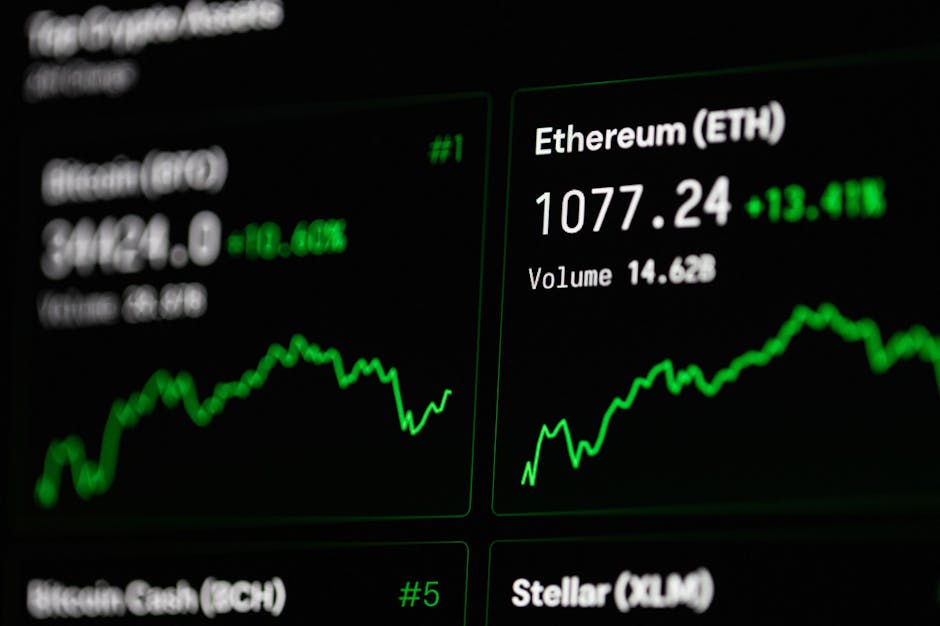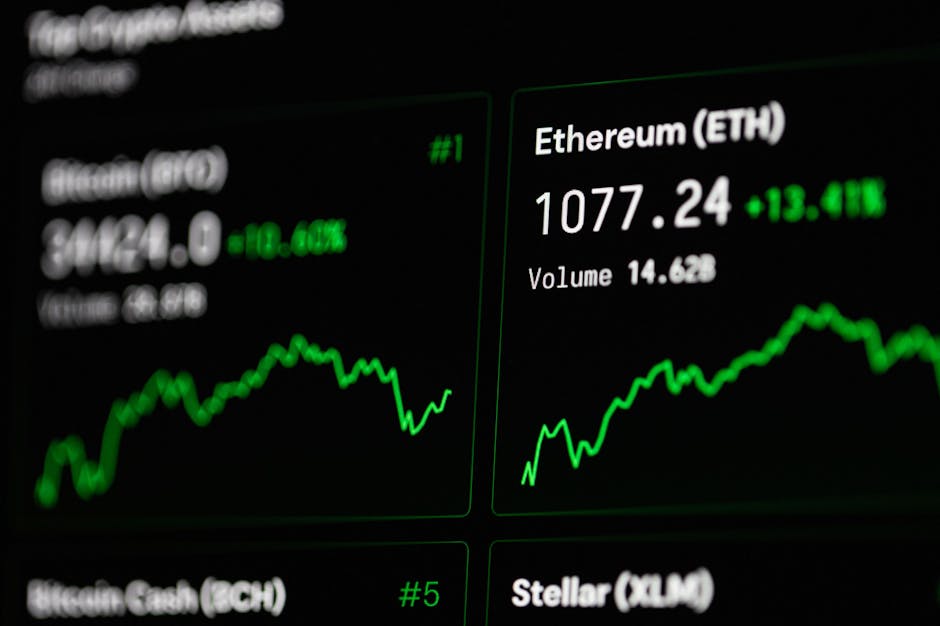
Ethereum (ETH) has recently demonstrated a notable degree of resilience and short-term outperformance within the broader cryptocurrency market, navigating a landscape characterized by fluctuating macroeconomic sentiment and significant institutional capital movements. Despite a general market rebound following an inflation-driven sell-off, Ethereum has shown stronger upward momentum compared to its major counterparts, including Bitcoin and Solana cryptonews.com. This relative strength emerges even as the asset contends with substantial net outflows from US spot Ethereum Exchange-Traded Funds (ETFs) and the lingering impact of recent liquidation events that have affected leveraged positions across the digital asset ecosystem cryptonews.com cryptonews.com. The interplay of these factors—robust short-term price action, shifting institutional demand signals, and persistent macroeconomic pressures—creates a complex analytical picture for Ethereum's near-term trajectory.
\n\nEthereum's Recent Price Dynamics and Market Outperformance
\nIn a recent 24-hour period, Ethereum recorded an increase of almost 3%, positioning its price just below the $2,500 threshold cryptonews.com. This performance notably surpassed that of Bitcoin, which saw a gain of approximately 0.7% over the same timeframe, and Solana, which advanced by 2.0% cryptonews.com. This short-term outperformance places Ethereum among the stronger performers within the major cryptocurrency sector during this specific rebound phase cryptonews.com.
\nLooking at a broader quarterly perspective, Ethereum's performance in the third quarter of 2026 was even more pronounced. The asset experienced a substantial gain of 71.0%, reaching a price of $2,684 en.cryptonomist.ch. This significant appreciation allowed Ethereum to outperform Bitcoin and other major assets tracked in a comprehensive industry report for that quarter en.cryptonomist.ch. The third quarter marked a period of recovery for the crypto market, ending three consecutive quarterly declines and delivering its strongest quarterly gain since the fourth quarter of 2024 en.cryptonomist.ch.
\nDespite this strong price recovery, Ethereum's trading activity did not keep pace with its price appreciation. The average daily trading volume for Ethereum in the third quarter declined by 23.2%, falling to $11.5 billion from $15.0 billion in the second quarter en.cryptonomist.ch. This divergence between price performance and trading volume suggests that the rally may have been driven by factors other than increased spot trading activity, potentially including accumulation by larger entities or a reduction in selling pressure rather than a surge in new retail participation en.cryptonomist.ch.
\nFrom a technical analysis standpoint, Ethereum's current price of approximately $2,450 positions it above a critical support zone identified between $2,350 and $2,370 cryptonews.com. However, it remains below a nearer resistance level around $2,500, which also coincides with the 50-day Exponential Moving Average (EMA) cryptonews.com. The observed trading range for Ethereum extends from $2,350 to $2,810 cryptonews.com. Sustained buying pressure could potentially enable Ethereum to extend its recovery towards the upper boundary of this range at $2,810 cryptonews.com. A confirmed close above this $2,810 ceiling could further strengthen a bullish outlook, with some analysts observing a measured objective around $3,270–$3,280 cryptonews.com. Conversely, a decisive break below the $2,350 support level would invalidate the current bullish setup within this range, potentially bringing the $1,900–$2,000 area back into consideration cryptonews.com.
\n\nETF Flows: A Mixed Signal for Ethereum
\nThe landscape of US spot Ethereum ETFs has presented a complex and somewhat contradictory picture regarding institutional demand for the asset. While the third quarter of 2026 saw significant positive momentum, with US spot ETH ETFs attracting $3.1 billion in net inflows, effectively reversing all outflows experienced during the first half of 2026 en.cryptonomist.ch, more recent data indicates a shift towards net outflows.
\nSpecifically, from October 12 to October 15, US spot Ethereum ETFs recorded approximately $250.4 million in net outflows cryptonews.com. This period included a brief inflow of $24.8 million on October 13, which was subsequently overshadowed by larger outflows of $129.5 million on October 14 and $60.3 million on October 15 cryptonews.com. These recent outflows are consistent with broader caution observed across the crypto market, as Bitcoin ETFs also experienced significant withdrawals during the same period cryptonews.com. For instance, on October 14 alone, spot Ethereum ETFs recorded $130 million in net outflows, coinciding with Bitcoin ETFs losing $261.4 million cryptonews.com.
\nThe persistence of these ETF outflows represents a notable headwind for a sustained Ethereum rally, despite the asset's recent relative strength in price cryptonews.com. The dynamic nature of these flows, with sharp swings from inflows to redemptions, suggests that market participants are closely monitoring successive readings rather than interpreting single sessions as definitive shifts in institutional positioning cryptonews.com. The next rounds of ETF flow data are anticipated to provide clearer insights into whether institutional demand is returning or if selling pressure continues to build cryptonews.com.
\nAdding to the complexity, VanEck Digital Assets formally requested the US Securities and Exchange Commission (SEC) to withdraw the registration for its proposed Lido Staked Ethereum ETF on October 14, 2026, nearly a year after its initial filing cryptonews.com. This withdrawal pertains to a product designed to offer brokerage investors exposure to staked Ether through a listed vehicle cryptonews.com. VanEck's decision to not proceed with the fund, as confirmed in its filing, means that no securities were issued or sold under this registration, and no preliminary prospectus was distributed cryptonews.com. This development highlights the ongoing regulatory and product risks associated with staking-linked ETF proposals, even as Ethereum's underlying network continues its development, including testing related to its gas limit cryptonews.com. The absence of this specific staked ETH product from the market structure underscores the cautious approach by some firms in navigating the evolving regulatory landscape for novel crypto investment vehicles cryptonews.com.
\n\nMacroeconomic Headwinds and Liquidation Events
\nThe broader cryptocurrency market, including Ethereum, has recently experienced pressure from macroeconomic factors, particularly inflation expectations and their influence on interest rate outlooks cryptonews.com. A hotter-than-expected US Consumer Price Index (CPI) reading on October 14 indicated that annual inflation accelerated to 3.7% from 3.4%, surpassing the 3.6% forecast, while core inflation rose to 2.6% cryptonews.com. Such inflation data can dampen expectations for monetary easing by central banks, potentially leading to higher-for-longer interest rates, which typically pressures risk assets like cryptocurrencies by increasing the opportunity cost of holding non-yielding assets and tightening financial conditions cryptonews.com cryptonews.com.
\nThis macroeconomic backdrop contributed to a significant liquidation-driven sell-off across the crypto market. On October 14, total crypto liquidations neared $942.1 million, with long positions accounting for a substantial 91.6% of these forced exits cryptonews.com. In a 24-hour futures tally reported during Asian morning hours, Ethereum alone accounted for approximately $286 million of the $483 million in combined Bitcoin and Ether liquidations cryptonews.com. This indicates that Ethereum's leveraged positions were particularly vulnerable to the market downturn, experiencing a 6.4% fall to $2,350, compared to Bitcoin's 3.2% decline during the liquidation snapshot cryptonews.com.
\nThe rapid unwinding of leveraged positions, often triggered by falling collateral values when prices move adversely, can exacerbate market declines by adding further sell orders cryptonews.com. An illustrative example of this risk was observed with Jeffrey Huang, known as Machi Big Brother, whose Hyperliquid trading account saw a dramatic drop from a peak of $12.25 million to just $21,000 after a liquidation event on October 15, 2026 cryptonews.com. This event unfolded as Bitcoin fell below $81,000 and Ethereum approached $2,380, highlighting how quickly leveraged gains can evaporate in volatile market conditions cryptonews.com.
\nWhile liquidations can clear crowded positioning and potentially set the stage for a rebound by removing excess leverage, they do not inherently establish a price floor cryptonews.com. The market's ability to absorb this forced selling and stabilize will be crucial for any sustained recovery cryptonews.com. The confluence of macro pressure and fragile technicals often leads some market participants to explore alternative, early-stage projects, seeking different risk profiles away from established assets cryptonews.com.
\n\nBroader Crypto Market Context
\nThe overall cryptocurrency market experienced a significant rebound in the third quarter of 2026, with the total market capitalization increasing by 39.6% to approximately $3.0 trillion by the end of September en.cryptonomist.ch. This recovery marked the strongest quarterly gain since the fourth quarter of 2024, although the total capitalization remained 4.0% below its level at the start of 2026 en.cryptonomist.ch. August was a particularly strong month, contributing over half of the quarter's gains with a $489.8 billion increase, as market capitalization rose by 21.8% en.cryptonomist.ch. This acceleration was linked to the US Treasury's plans to increase purchases of long-dated government bonds and sustained net inflows into spot Bitcoin ETFs en.cryptonomist.ch.
\nDespite the robust market cap growth, average daily trading volume across the crypto market declined by 8.6% in the third quarter, settling at $73.3 billion en.cryptonomist.ch. This marked the third consecutive quarterly decline in trading activity, suggesting that the price recovery was not uniformly supported by increased spot trading participation en.cryptonomist.ch. However, activity did strengthen within the quarter, with September averaging $94.8 billion a day, an increase from $57.7 billion in July en.cryptonomist.ch. In contrast to spot volumes, open interest in perpetual futures across the top 10 centralized exchanges increased by 40.6%, surpassing $100 billion for the first time since the third quarter of 2025 en.cryptonomist.ch. This indicates a recovery that favored leveraged positions over spot trading en.cryptonomist.ch.
\nBitcoin, while experiencing a recent rebound to $82,000 from $80,000, has also faced significant headwinds cryptonews.com. US spot Bitcoin ETFs recorded $261.4 million in net outflows on October 14, with Fidelity's FBTC and BlackRock's IBIT leading these withdrawals cryptonews.com. This occurred after Bitcoin had fallen below $80,000 due to hotter-than-expected inflation data that pushed Treasury yields higher cryptonews.com. Fidelity's research highlighted a new record in Bitcoin's market-cap correlation with 10-year Treasury real rates, with the relationship having shifted cryptonews.com. This suggests that while Bitcoin has shown some resilience at the $80,000 support level, the broader macro environment, particularly rising yields and equity weakness, continues to threaten risk appetite cryptonews.com. The October 16 expiry of approximately $1.46 billion in Bitcoin options could also introduce short-term volatility cryptonews.com.
\nSocial sentiment analysis also provides a comparative view of market attention. While XRP's bullish-to-bearish comment ratio improved from 0.67 to 0.92 at the start of October, it still remained below parity, indicating that bearish discussion continued to outweigh bullish commentary cryptonews.com. In contrast, Ethereum's ratio reached 2.05 bullish comments per bearish one, which Santiment characterized as "FOMO territory," connecting this enthusiasm to ETH's rebound above support, staking demand, and expectations for network improvements cryptonews.com. This divergence suggests a clear shift in online attention and sentiment favoring Ethereum over XRP during this period cryptonews.com.
\n\nTechnical Levels and Future Scenarios for ETH
\nEthereum's current market positioning is characterized by a delicate balance between established support levels and overhead resistance, with macroeconomic factors acting as significant swing factors. The asset's price, currently around $2,450, is situated above the $2,350–$2,370 support zone cryptonews.com. This zone has been a critical area for buyers to defend, particularly after a recent liquidation-driven sell-off saw Ethereum's price fall to $2,350, representing a 6.5% loss in market capitalization over 24 hours cryptonews.com. The immediate challenge for Ethereum is to maintain its position above this support and attempt to reclaim the psychological $2,500 level, which also serves as a nearer resistance point and aligns with the 50-day Exponential Moving Average (EMA) cryptonews.com.
\nIn a bullish scenario, if the $2,350–$2,370 support zone holds firm and Ethereum successfully clears the $2,500 resistance, its recovery could extend towards the upper boundary of its established range at $2,810 cryptonews.com. A sustained close above $2,810 would be interpreted as a strengthening of the bullish case, with some analysts observing a measured objective in the range of $3,270–$3,280 cryptonews.com. This upward movement would ideally be accompanied by renewed buying pressure that can overcome the existing headwinds from ETF outflows and macro concerns cryptonews.com.
\nConversely, a bearish scenario would materialize if Ethereum fails to hold the $2,350 support. A confirmed break below this level would invalidate the current bullish setup within the range and could bring the $1,900–$2,000 area back into focus as the next significant downside reference cryptonews.com. The market's digestion of forced selling following liquidation events, which saw Ethereum account for approximately $286 million of combined Bitcoin and Ether liquidations in a 24-hour period, underscores the potential for rapid downside if support levels are breached cryptonews.com. The setup is currently described as "damaged, not settled," indicating that while a recovery is possible, it is not yet confirmed and remains highly conditional on buyers' ability to turn the liquidation flush into a durable reclaim of key levels cryptonews.com.
\nMacroeconomic conditions continue to be a pivotal swing factor for Ethereum's price action. Persistent hotter-than-expected inflation could lead to elevated interest rate expectations and higher yields, which typically exert downward pressure on risk assets cryptonews.com. Conversely, any easing of rate concerns would remove some of this macroeconomic headwind, potentially fostering a more favorable environment for cryptocurrencies cryptonews.com. The ongoing ETF outflows also add a separate demand warning, suggesting that institutional interest, while strong in Q3, is currently facing a period of caution cryptonews.com. Therefore, traders are observed to be comparing current price levels with recent ETH outlooks that cover support, resistance, and ETF flows before confirming any modest daily moves as definitive trend confirmations cryptonews.com.
\n\nInstitutional Developments and Regulatory Landscape
\nThe institutional engagement with Ethereum and the broader crypto market is a dynamic area, marked by both significant capital flows and evolving regulatory considerations. While US spot Ethereum ETFs recorded substantial net inflows of $3.1 billion in the third quarter of 2026, effectively reversing earlier outflows en.cryptonomist.ch, the recent withdrawal of VanEck's proposed Lido Staked Ethereum ETF highlights the complexities and challenges in bringing certain crypto-linked products to traditional investment markets cryptonews.com.
\nVanEck Digital Assets formally requested the SEC to withdraw its registration for the Lido Staked Ethereum ETF on October 14, 2026, nearly a year after its initial filing cryptonews.com. This proposed fund aimed to offer investors exposure to staked Ether (stETH), Lido's liquid-staking token, and its associated staking rewards, rather than directly holding spot ETH cryptonews.com. The withdrawal confirms that the registration statement had not become effective, and no securities were issued or sold under it cryptonews.com. This decision underscores the ongoing scrutiny and potential regulatory hurdles for products involving liquid staking arrangements, particularly in light of an August 2025 SEC staff statement that distinguished qualifying activities from those involving managerial or entrepreneurial efforts cryptonews.com. The withdrawal, while not directly impacting existing ETF holders or requiring asset sales, signals a cautious approach by firms in navigating the regulatory environment for novel crypto investment vehicles cryptonews.com.
\nIn a separate but related development within the institutional crypto space, Evernorth, a company recently listed on Nasdaq as XRPN, announced plans to begin deploying assets from its 473 million XRP treasury in the fourth quarter of 2026 en.cryptonomist.ch cryptonews.com. The company has selected Ripple, Kraken, Coinbase, and BitGo as its initial institutional execution partners, aiming to generate returns from its XRP holdings rather than maintaining a passive treasury en.cryptonomist.ch cryptonews.com. This phased deployment strategy will initially utilize established institutional counterparties, with direct allocation to on-chain markets planned for a later phase, contingent on the maturation and activation of the XRP Ledger's native lending and credit capabilities en.cryptonomist.ch. The company's Chief Investment Officer, Hugo Jeandesboz, emphasized a disciplined treasury management approach, guided by accountability to a public-company board, which will also inform the move to on-chain strategies en.cryptonomist.ch. This initiative illustrates a growing trend among institutional players to actively manage and generate income from their digital asset holdings, albeit with a cautious, phased approach to integrating decentralized finance (DeFi) strategies en.cryptonomist.ch.
\n\nEmerging Technologies and Long-Term Considerations
\nBeyond the immediate price dynamics and institutional flows, the cryptocurrency market is also influenced by long-term technological developments and speculative forecasts. One such development is the advancement in quantum computing, which has rekindled discussions about its potential implications for the cryptographic security of digital assets like Bitcoin cryptonews.com. Google's latest quantum computing technique reportedly achieved a 40x reduction in relevant error rates and reached 99.9% accuracy, utilizing a method called "magic state cultivation" on its Willow chip cryptonews.com. While this represents a significant milestone in addressing quantum error, its demonstration at a larger scale is still required, meaning the immediate threat to current cryptographic networks remains unchanged cryptonews.com.
\nHowever, this progress does make the longer-term Bitcoin quantum risk more difficult to dismiss as a purely theoretical engineering problem, suggesting the gap between current capabilities and a potential "Q-Day" (the moment a quantum computer could break current cryptography) is narrowing, though still substantial cryptonews.com. Google's research indicates that breaking Bitcoin's security would require 1,200 to 1,450 logical qubits, which are error-corrected units necessary for reliable computation, distinct from raw physical qubits cryptonews.com. Current quantum chips, such as Google's Willow chip with 105 qubits or IBM's reported 70 logical qubits, are still far from this requirement, with IBM's roadmap targeting 2,000 logical qubits by 2033 cryptonews.com. Experts like Jameson Lopp, co-founder of Casa, estimate that a machine capable of decoding a Bitcoin public key could be at least another decade away cryptonews.com. Nevertheless, the progress in error correction reinforces the importance of long-term planning for Bitcoin's post-quantum migration challenge cryptonews.com.
\nIn the realm of speculative forecasts, artificial intelligence (AI) models have generated highly optimistic price predictions for Bitcoin. For instance, Google Gemini AI has predicted that Bitcoin could reach $175,000 by January 1, 2027, under a hypothetical scenario involving a landmark, multi-trillion-dollar financial strategy by the United States that accelerates Bitcoin accumulation, coupled with substantial allocations from major sovereign wealth funds and pension systems cryptonews.com. This scenario, while extreme, posits a potential for one of Bitcoin's most explosive rallies, fueled by renewed institutional buying and a significant short squeeze cryptonews.com. Similarly, Sam Altman's ChatGPT AI has predicted an even more ambitious target, suggesting Bitcoin could trade between $600,000 and $1,200,000, with a stretch target of $1.8 million by early 2027, assuming a full-blown crypto bull market and a transformative catalyst such as a pilot program by energy-exporting nations for settling international trades in Bitcoin cryptonews.com cryptonews.com. These AI-driven predictions, while speculative and contingent on highly improbable geopolitical and market shifts, highlight the potential for significant upside under specific, transformative catalysts, even as Bitcoin's immediate technical picture remains challenging, requiring it to defend key support zones and reclaim resistance levels cryptonews.com cryptonews.com.
\n\nConclusion
\nEthereum's recent market performance reflects a complex interplay of short-term outperformance, shifting institutional sentiment, and persistent macroeconomic pressures. While ETH has demonstrated notable resilience, particularly in its 24-hour and Q3 price gains relative to other major cryptocurrencies, the asset faces immediate challenges from significant net outflows in US spot Ethereum ETFs and the lingering effects of recent liquidation events. The macroeconomic environment, characterized by hotter-than-expected inflation and its potential impact on interest rate expectations, continues to be a critical swing factor, influencing risk appetite across the broader crypto market. Technically, Ethereum is positioned at a crucial juncture, with its ability to hold key support levels and reclaim overhead resistance being paramount for extending its recovery. The institutional landscape remains dynamic, as evidenced by the withdrawal of a proposed staked ETH ETF, contrasting with other firms' plans for active treasury management in digital assets. Long-term technological advancements, such as quantum computing, and highly speculative AI-driven price forecasts, while not immediate market drivers, underscore the evolving nature and potential future trajectories of the digital asset space.
\n\nWhat We Don't Know
\nThe precise impact of future macroeconomic data releases on crypto market sentiment remains uncertain, particularly regarding how inflation trends will influence central bank policy and, consequently, risk asset valuations. The duration and magnitude of the current net outflows from US spot Ethereum ETFs are not yet clear, making it difficult to ascertain if this represents a temporary pause in institutional accumulation or a more sustained shift in demand. Furthermore, the exact mechanisms and timing through which institutional treasury management strategies, such as Evernorth's XRP deployment, will translate into broader market demand or price action for specific digital assets are yet to be fully observed and quantified.
", "title": "Ethereum's Resilience Tested by ETF Outflows Amid Crypto Rebound", "subtitle": "ETH demonstrates short-term outperformance and Q3 gains, yet faces headwinds from recent ETF withdrawals and macro inflation concerns.", "seo_meta": { "description": "Analysis of Ethereum's recent price outperformance, ETF flows, macroeconomic pressures, and technical levels amidst a broader crypto market rebound.", "keywords": ["Ethereum price", "ETH analysis", "crypto ETFs", "market rebound", "liquidation"] }, "image_search_terms": ["Ethereum chart", "crypto market", "blockchain network"] } ```