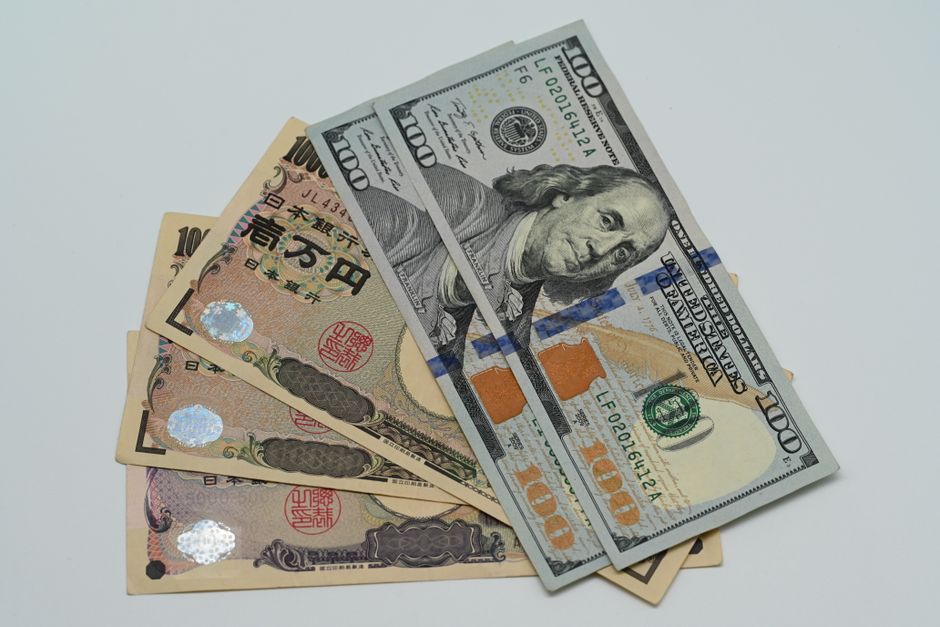
The Paradox of Tightening: Japan’s 1.25% Rate Hike and the Yen’s Retreat
The Bank of Japan (BoJ) has executed a significant shift in its monetary trajectory, raising its short-term interest rate by 25 basis points to 1.25% currencythoughts.com. This decision, reached after a two-day deliberation lasting nearly five hours, marks the highest interest rate level for the nation in 377 months [4]. Despite this hawkish move—the third increase since last December, bringing the cumulative tightening to 75 basis points—the market reaction defied traditional economic theory [3]. Instead of strengthening on the news of higher yields, the Japanese yen weakened by more than 1.0%, while the Nikkei-225 index surged 1.4% [4]. This paradoxical response highlights a complex intersection of political pressure, internal board dissent, and a global macro environment dominated by a resurgent U.S. dollar and volatile energy markets.
Political Interference and the Takaichi Dissent
The BoJ’s decision was far from unanimous, revealing deep fractures within the 9-person board. Two members, Asada Toichiro and Sato Ayano, cast dissenting votes against the 25-basis point hike [3]. Both dissenters are appointees of Prime Minister Sanae Takaichi, who has championed a stimulative fiscal policy since taking office 11 months ago [4]. Asada argued that with the Consumer Price Index (CPI) excluding fresh food remaining below 2%, the economic situation was not sufficiently robust to warrant tightening [3]. Sato echoed this sentiment, suggesting that current price developments had not accelerated enough to justify a rate increase at this time [4].
The optics of the decision were further complicated by external political pressures. Reports indicate the Trump administration has been publicly urging the Bank of Japan to tighten policy more aggressively to promote a stronger yen [3]. This creates a friction point with Prime Minister Takaichi’s domestic agenda, as low interest rates are essential for financing her fiscal expansion [4]. Analysts observe that the Prime Minister will have further opportunities in the coming year to appoint board members who align with her preference for accommodative policy, potentially limiting the BoJ's ability to sustain a long-term tightening cycle [3].
Global Yield Divergence and the Carry Trade Resilience
While Japan’s 1.25% rate is its highest since 1995, it remains significantly lower than its Group of Seven (G7) peers [7]. This persistent yield gap is a primary driver of the yen's continued weakness. For instance, the Reserve Bank of Australia (RBA) maintains a cash rate of 4.35%, creating a spread of over 300 basis points even after the BoJ’s hike [7]. This differential continues to support the "carry trade," where investors borrow in low-yielding yen to fund investments in higher-yielding assets like the Australian dollar [7]. Consequently, the AUD/JPY pair advanced over 1% following the BoJ announcement, trading near the 112 level [7].
The broader currency market is also being shaped by the U.S. Federal Reserve’s recent actions. On September 16, 2026, the Fed raised its benchmark rate by 25 basis points to a range of 3.75%–4.00% investingcube.com. The Fed’s "dot plot" suggests at least one more hike is likely before the end of 2026, with 16 of 18 policymakers favoring further tightening [11]. This hawkish stance from the Fed has pushed the U.S. 10-year Treasury yield toward the 5.00% threshold, exerting downward pressure on almost all major currencies against the dollar [5]. The weighted DXY dollar index rose 0.3% following these developments, further overshadowing the BoJ’s modest rate increase [4].
Economic Fundamentals: Growth and Inflation Realities
The BoJ’s cautious approach is rooted in a Japanese economy that many describe as growing only "moderately" [3]. Real GDP growth has been inconsistent: after a 1.3% expansion in 2022, it rose 0.7% in 2023, contracted by 0.2% in 2024, and rebounded by 1.1% in 2025 [4]. In the first half of 2026, year-on-year growth sat at a meager 0.6% [3]. Inflation data for August 2026 also showed signs of cooling, with the headline CPI rising 1.9% and the core measure (which includes energy in Japan) rising 1.7% [4].
Governor Kazuo Ueda’s post-decision commentary attempted to "thread a needle" by promising future hikes while emphasizing the need for continued accommodative conditions to support this fragile growth [3]. However, external factors continue to threaten price stability. The ongoing conflict in the Middle East and a global surge in AI development have kept energy and technology costs elevated [4]. Brent crude oil, while retreating slightly to $103–$104 per barrel, remains in triple-digit territory, contributing to "imported inflation" for energy-dependent nations like Japan and India [1] [5].
Impact on Global Markets and Emerging Economies
The shift in Japanese and U.S. monetary policy is vibrating through global equity and forex markets. The Nasdaq 100 faces a "triad of headwinds": higher oil prices, higher inflation, and higher-for-longer interest rates [2]. While AI demand has provided a buffer for tech valuations, the index remains sensitive to the 10-year Treasury yield; a sustained move above 5.00% could trigger a selloff toward the 28,000 level [2].
In emerging markets, the Indian rupee has come under intense pressure. The USD/INR pair recently tested a seven-week low of 96.20 following the Fed’s hike and a spike in oil prices to $109 [1]. The Reserve Bank of India (RBI) has reportedly established a "defense zone" at the 96.00 level, intervening through state-run banks to prevent disorderly depreciation [1]. Markets are now pricing in 80 basis points of RBI hikes over the next 12 months to combat imported inflation and currency volatility [1].
Conclusion: A Fragile Normalization
The Bank of Japan’s decision to raise rates to 1.25% represents a historic step away from decades of ultra-loose monetary policy, yet the immediate market reaction suggests that the "normalization" process is far from complete [3] [4]. By failing to provide aggressive forward guidance and facing internal political dissent, the BoJ has allowed the yen to remain a victim of the massive interest rate differentials established by the Fed and other central banks [7]. As long as U.S. yields hover near 5% and global energy prices remain elevated, Japan’s efforts to strengthen its currency through incremental hikes may continue to be neutralized by the broader tide of global capital flows [2] [6].
What We Don't Know
It remains unclear whether Prime Minister Takaichi will successfully shift the BoJ Board's balance toward a more dovish stance through future appointments, which could halt the current tightening cycle. Additionally, the extent to which the Trump administration will escalate pressure for yen appreciation—or if they will resort to further coordinated market interventions—is unknown. Finally, the long-term impact of the Middle East conflict on oil supply logistics remains a volatile variable that could force central banks into more aggressive inflation-fighting stances than currently projected.