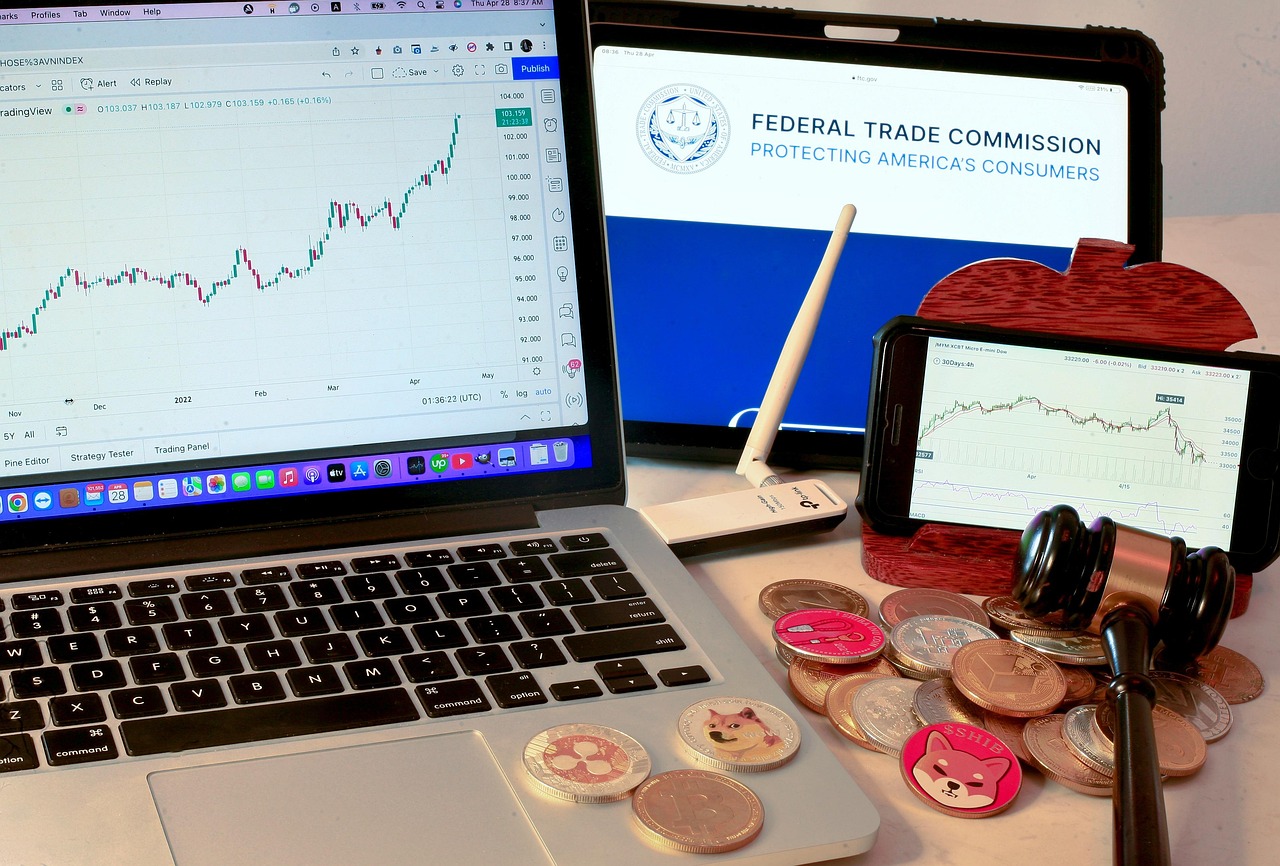
The anticipated appointment of Jay Clayton, the former Chairman of the Securities and Exchange Commission (SEC), as the White House’s artificial intelligence czar marks a pivotal shift in the intersection of financial regulation and emerging technology. Clayton, who earned a reputation as a formidable "crypto enforcer" during his tenure at the SEC, is expected to lead the administration’s newly formed "AI Force," a strategic initiative aimed at securing American dominance in the global AI race en.cryptonomist.ch. This transition from policing digital assets to steering national AI policy suggests a regulatory philosophy that prioritizes national security and institutional oversight over the laissez-faire approaches often favored by Silicon Valley. As the administration separates its technology portfolios—assigning AI to Clayton and crypto efforts to other advisors—the move signals a maturation of the federal government's approach to disruptive innovation, treating superintelligence as a core pillar of national defense en.cryptonomist.ch.
The Regulatory Legacy of Jay Clayton: From Crypto to AI
Jay Clayton’s expected role as AI czar is deeply informed by his previous experience as a Wall Street regulator. During his time leading the SEC, Clayton was the primary architect of the "regulation-by-enforcement" era for digital assets en.cryptonomist.ch. His approach was characterized by a strict adherence to existing securities laws, which he applied aggressively to the then-nascent cryptocurrency sector. In 2017, Clayton established the SEC’s Cyber Unit specifically to police initial coin offerings (ICOs) and other blockchain-related activities en.cryptonomist.ch.
By the time Clayton departed the SEC in 2020, the agency had initiated 57 enforcement actions against digital-asset firms and ICOs en.cryptonomist.ch. These cases were often built on the premise that firms were attempting to defraud investors through the use of digital asset securities without proper federal registration en.cryptonomist.ch. Perhaps his most significant legacy in the crypto space was the lawsuit against Ripple Labs, which accused the company of failing to register approximately $1.3 billion in XRP token sales as securities en.cryptonomist.ch. While this case was eventually dismissed under the leadership of Chairman Paul Atkins, it set a precedent for how the U.S. government views the intersection of technology and finance en.cryptonomist.ch.
AI as a National Security Imperative
In his new capacity, Clayton is expected to treat artificial intelligence with the same level of scrutiny he once applied to financial markets, but with a heightened focus on national security. Speaking at a recent White House technology meeting, Clayton described "superintelligence" as a critical national security issue, a sentiment echoed by industry leaders and administration officials en.cryptonomist.ch. Unlike some advocates who have called for a pause in AI development to assess risks, Clayton has expressed opposition to such delays, suggesting that the U.S. must maintain its competitive edge en.cryptonomist.ch.
The creation of the "AI Force"—a term the President has compared to the establishment of the Space Force—indicates that the administration views AI not just as a commercial tool, but as a strategic asset en.cryptonomist.ch. Clayton’s role will likely involve coordinating between the private sector and the Director of National Intelligence, a position he is also expected to continue holding en.cryptonomist.ch.
The Bifurcation of Tech Policy: AI vs. Crypto
The expected appointment of Clayton marks a significant reorganization of how the White House manages technology policy. Previously, David Sacks served as a combined special adviser for both AI and crypto until March 2025 en.cryptonomist.ch. Since his departure, the portfolios have been split. While Clayton takes the lead on AI, crypto-related efforts are now spearheaded by adviser Patrick Witt en.cryptonomist.ch.
This separation suggests that the administration no longer views AI and blockchain as a single "emerging tech" bucket. Instead, they are being treated as distinct fields with different regulatory needs. This shift comes as the President’s own stance on crypto has evolved from skepticism in 2021—when he suggested the industry should be regulated "very, very high"—to becoming a vocal booster during the 2024 campaign en.cryptonomist.ch.
Emerging Threats: AI-Assisted Attacks in Decentralized Finance
The urgency of Clayton’s new role is underscored by real-world threats currently facing the technology sector. On October 2, 2026, the Arbitrum Security Council took the unprecedented step of pausing new Stylus contract activations on the Arbitrum One and Nova networks en.cryptonomist.ch thedefiant.io. This emergency action was a direct response to the rise of sophisticated, AI-assisted attacks en.cryptonomist.ch.
The vulnerability involved attackers using AI to craft raw WebAssembly bytecode that could sidestep standard compiler toolchains, potentially exploiting edge cases to threaten network liveness en.cryptonomist.ch. While no user funds were stolen, the risk of denial-of-service conditions that could stall the network prompted the Council to raise activation gas costs to prohibitively expensive levels, effectively freezing new entries en.cryptonomist.ch. This incident highlights the "dual-use" nature of AI: while it can drive innovation, it also provides bad actors with powerful tools to probe for weaknesses in critical infrastructure.
Privacy and Security in the Age of AI and Blockchain
As AI becomes more integrated into daily life, the privacy of the data used to train and interact with these models has become a central concern. On October 1, 2026, the Ethereum Foundation and the Open Anonymity Project launched "zkAPI" on the Ethereum mainnet en.cryptonomist.ch. This system uses zero-knowledge proofs to allow users to make private, metered payments for API services, such as those provided by OpenAI, without linking their identity to their request history en.cryptonomist.ch.
The zkAPI protocol addresses a growing problem: standard API billing typically ties a user's payment method to their entire transcript of thoughts and queries en.cryptonomist.ch. By using a vault contract where users deposit ETH or USDC to create a private "note," the system ensures that individual requests remain unlinkable on-chain en.cryptonomist.ch. However, the protocol does not yet hide network metadata like IP addresses, illustrating the ongoing struggle to achieve total privacy in a digital environment en.cryptonomist.ch.
The Global Race for Sovereign Digital Currencies
While the U.S. focuses on AI oversight, other nations are moving forward with state-backed digital innovations. On October 1, 2026, the Russian Ministry of Finance began a pilot program paying government employees in digital rubles coinidol.com. This move represents a transition from theoretical testing to live public-sector execution, using the Bank of Russia’s digital platform to stress-test the speed and security of programmatic government spending coinidol.com. Such developments suggest that the global financial landscape is becoming increasingly tokenized, a trend that Clayton’s AI and national security policies will likely have to account for.
Fraud and the Need for Robust Oversight
The darker side of the technology boom is evident in the persistent rise of sophisticated fraud schemes. In Greece, authorities recently arrested 17 individuals, including nine active-duty military personnel, for operating a $8 million cryptocurrency pyramid scheme en.cryptonomist.ch. The platform promised to double investors' money within 50 days, attracting over 10,000 participants before being shut down en.cryptonomist.ch.
Similarly, the closure of long-standing services like LetsExchange on October 1, 2026, due to "increasingly complex regulatory requirements," highlights the pressure that even legitimate businesses face in the current environment cryptodaily.co.uk. These events reinforce the argument for experienced regulators like Clayton to step into leadership roles where they can balance the need for innovation with the necessity of protecting the public from exploitation.
Conclusion: A New Era of Technocratic Governance
The expected appointment of Jay Clayton as AI czar signals that the era of "move fast and break things" is being replaced by a more calculated, security-focused approach to technology. Clayton’s history as a crypto enforcer suggests that he will not hesitate to use the full weight of federal oversight to ensure that AI development aligns with national interests. As the administration bifurcates its tech policy and addresses emerging threats like AI-assisted cyberattacks, the focus has clearly shifted toward institutional stability and national defense. For investors and developers alike, the message is clear: the next phase of technological growth will be defined by its relationship with the state, and the regulators of the past are becoming the architects of the future.
What We Don't Know
While Clayton is the expected choice, the White House has not yet made an official announcement, and a spokesperson recently characterized current reporting as "speculation" en.cryptonomist.ch. It remains unclear how Clayton will balance his dual roles as AI czar and Director of National Intelligence, or how much autonomy the "AI Force" will have compared to existing agencies. Additionally, the specific legislative goals Clayton might pursue to regulate AI "superintelligence" have not been detailed in current reports.