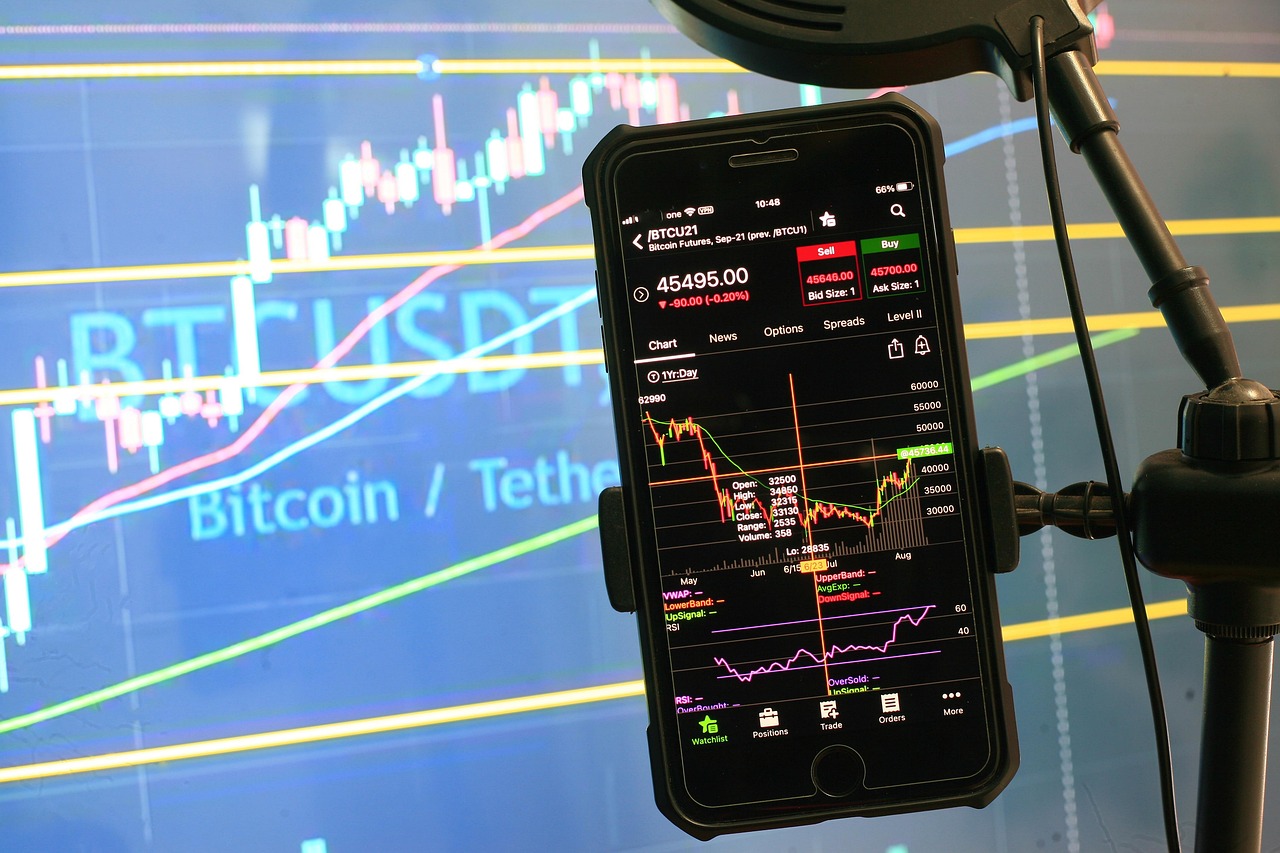
The allure of crypto-arbitrage often rests on the visual simplicity of a price gap: the numerical distance between an asset's value on a decentralized exchange (DEX) and its price on a centralized trading venue. However, quantitative analysis of live market events, such as the massive security breach at Binance on October 29, 2026, reveals that these spreads are frequently mirages that dissolve under the weight of execution costs, liquidity constraints, and systemic risks. While a quoted spread might suggest an immediate opportunity for gain, the reality of moving capital across fragmented networks—especially during periods of high volatility—transforms a theoretical profit into a complex exercise in risk management where the net return often fails to materialize.
The Anatomy of a Vanishing Spread
To understand why a quoted arbitrage spread is not net profit, one must look at the friction inherent in every leg of the trade. In a typical DEX-to-exchange arbitrage scenario involving Ethereum (ETH), the gross spread is immediately eroded by a gauntlet of fees. These include network gas fees for the on-chain swap, the DEX's internal liquidity provider fees, and the centralized exchange's taker fees thedefiant.io. For instance, during the market turbulence following the Binance breach, ETH traded at a staggering 20% premium on Uniswap compared to Binance thedefiant.io. While this 20% gap appeared to be a historic opportunity, the actual execution was hampered by the fact that Binance had suspended withdrawals, effectively trapping capital and preventing the rebalancing necessary to realize the spread thedefiant.io.
Furthermore, the cost of "prefunding" accounts to capture these spreads introduces a different category of risk. Arbitrageurs often maintain standing balances of both base assets and stablecoins on multiple venues to avoid the latency of cross-chain transfers. However, this strategy does not remove risk; it merely transfers it to the rebalancing phase thedefiant.io. If an arbitrageur captures a spread by selling ETH on a high-priced DEX and buying it on a low-priced exchange, they must eventually move the ETH back to the DEX or the stablecoins back to the exchange to reset the position. If withdrawal services are halted—as seen with Binance's suspension of several networks—the arbitrageur is left with an unbalanced portfolio and exposure to price movements during the downtime en.cryptonomist.ch thedefiant.io.
Liquidity Crunches and Execution Failure
The assumption that a spread can be executed at the quoted price relies on the presence of sufficient liquidity, a factor that often fails during market stress. On October 30, 2026, Jupiter Lend reported a severe liquidity crunch where its API showed only 3.35 USDC immediately withdrawable against 418.5 million USDC in Earn deposit claims thedefiant.io. For an arbitrageur relying on those funds to close a leg of a trade, this 99.9% liquidity shortfall represents a total execution failure. Similarly, SparkLend’s Ethereum USDT market saw utilization hold near 96%, with only $11.95 million available against $310 million borrowed, leaving suppliers dependent on a thin cash buffer for withdrawals thedefiant.io.
Slippage also plays a critical role in degrading net returns. In the aftermath of the Binance exploit, a single exploiter address sold assets like FUN, RAD, and OGN on Uniswap, causing the price of FUN to plunge by 95% in the pool thedefiant.io. An arbitrageur attempting to trade against such violent moves would find that the price moves against them faster than the transaction can be confirmed on-chain. Even on high-performance networks, the cost of certainty is rising; for example, Polymarket users pay approximately $1.74 per 100 contracts traded at 50 cents just in taker fees, before accounting for any rebates or price slippage thedefiant.io.
Systemic Risk and the "Freezing" Factor
The most significant hidden cost in modern crypto-arbitrage is the risk of asset freezing. Centralized stablecoin issuers like Tether and Circle have demonstrated an increasing willingness to intervene during security incidents. Following the $6.36 billion Binance hack, Tether froze approximately 1.77 billion USDT, while Circle froze 825 million USDC en.cryptonomist.ch. Total frozen assets across various partners reached approximately $3 billion thedefiant.io. For an arbitrageur, if the funds used in a trade are even tangentially linked to a compromised address, they risk having their entire capital base locked indefinitely. TRM Labs noted that frozen funds require lengthy legal recovery proceedings, which can take months or even years en.cryptonomist.ch.
This risk extends to the protocols themselves. Aave, a major DeFi lending platform, responded to the Binance breach by keeping nine assets at zero Loan-to-Value (LTV) and proposing to remove $3.7 billion of unused borrowing capacity on its V3 markets to mitigate risk thedefiant.io thedefiant.io. When collateral parameters change mid-trade, an arbitrage position that was once capital-efficient can suddenly trigger liquidations. On October 30, Bitcoin long liquidations hit $1.34 billion as the price traded below $80,000, illustrating how quickly leveraged positions can be wiped out when market conditions shift thedefiant.io.
The Impact of Regulatory and Infrastructure Shifts
Beyond immediate market mechanics, structural changes in the crypto ecosystem are adding new layers of cost to arbitrage. In Illinois, proposed crypto tax rules could apply levies to wallet withdrawals and bridging based on asset value, a move that groups like Uniswap and a16z are currently fighting thedefiant.io. If implemented, these rules would turn every cross-chain arbitrage leg into a taxable event, potentially exceeding the entire gross margin of the trade. Additionally, infrastructure providers like Circle are cutting legacy USDC cross-chain limits, forcing traders to migrate to newer, potentially more expensive standards thedefiant.io.
Conclusion: The Reality of Net Returns
The data from the October 2026 market events serves as a stark reminder that a crypto-arbitrage spread is merely a starting point for a calculation, not a final profit figure. The 20% ETH premium observed on Uniswap was not a "free" gain; it was a risk premium reflecting the possibility that funds on Binance might be lost or inaccessible for an extended period thedefiant.io thedefiant.io. When one accounts for gas fees, exchange fees, slippage, the cost of idle prefunded capital, and the non-zero probability of an issuer freeze or a protocol-level liquidity crunch, the "profitable" spread often shrinks to zero or turns negative. Successful arbitrage in the current environment requires not just fast execution, but a sophisticated understanding of the underlying plumbing of the financial system and the high costs of navigating its frequent blockages.
What We Don't Know
While investigators have traced $6.36 billion in stolen assets from the Binance breach, it remains unconfirmed how much of the un-frozen $3.36 billion can actually be recovered through law enforcement action en.cryptonomist.ch. Furthermore, the long-term impact of EIP-7702 delegations on exchange hot wallet security is still being evaluated by security firms thedefiant.io. Finally, it is unclear if the proposed DeFi tax exemptions in Illinois will be granted, which would fundamentally alter the cost-benefit analysis for domestic arbitrageurs thedefiant.io.