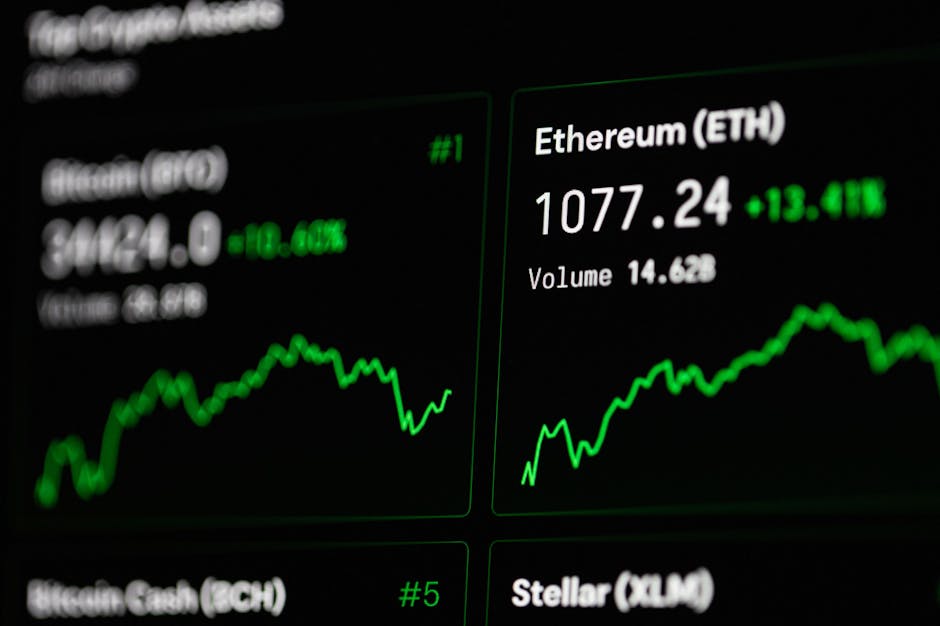
The cryptocurrency market witnessed a dramatic transformation this week as a significant price surge propelled Bitcoin (BTC) above the $71,000 threshold, eventually challenging the $79,000 level in a multi-day rally [1] [3] [16]. This aggressive upward movement, which saw Bitcoin gain approximately 11.4% within a single 24-hour window, was fueled by a rare convergence of macroeconomic policy shifts, record-breaking institutional inflows into spot exchange-traded funds (ETFs), and a massive short squeeze that liquidated billions in bearish bets [11] [35] [48]. Analysts observe that the rally effectively ended a six-week period of range-bound trading, shifting market sentiment from "fear" to "greed" almost overnight as the total crypto market capitalization reclaimed the $2.5 trillion mark [11] [31] [43].
The Macroeconomic Catalyst and the Price Surge Uber Analogy
The primary spark for the recent volatility originated not from within the crypto industry, but from the U.S. Treasury Department. On August 19, the Treasury announced it would at least double the maximum size of its liquidity-support buybacks for long-dated government bonds, increasing the cap from $2 billion to at least $4 billion per operation [1] [17] [30]. While these buybacks are technically a debt-management tool rather than central bank money creation, market participants treated the signal as a form of "QE Lite" [1] [41]. The announcement immediately pressured the 30-year Treasury yield, which fell from a high of 5.34% to approximately 5.19%, while the U.S. dollar weakened against major currencies [17] [35] [40].
This sudden shift in the liquidity environment created a market dynamic similar to uber surge pricing, where a rapid change in external conditions forces a sharp repricing of available supply. Just as a price surge uber drivers benefit from during high-demand periods reflects a temporary scarcity of service, Bitcoin’s fixed supply became a magnet for capital seeking a hedge against potential currency debasement and rising federal debt, which recently surpassed the $40 trillion milestone [4] [37] [40]. Billionaire investor Ray Dalio noted that Bitcoin serves as a limited but viable hedge in a diversified portfolio as U.S. fiscal stress reaches an inflection point [4].
Institutional Demand and Record ETF Inflows
While macro signals provided the backdrop, regulated investment vehicles provided the direct buying pressure. U.S. spot Bitcoin ETFs recorded their strongest performance of 2026, absorbing approximately $1.61 billion over a four-session streak [1] [10]. On August 20 alone, these funds saw net inflows of $606.29 million, the highest single-day intake since May 1 [1] [10] [22]. BlackRock’s IBIT fund dominated the landscape, accounting for roughly 83% of the daily total with $502.99 million in new capital [10] [31].
Concentration of Capital and Market Depth
The concentration of demand within a few major funds suggests that the price surge was driven by large-scale institutional allocators rather than retail speculation [10] [22]. Analysts at Bitfinex noted that this spot-led demand is structurally different from previous rallies driven by derivatives, as ETF purchases require the direct acquisition of Bitcoin held by regulated custodians [1] [9]. This accumulation has helped establish a new support floor, with on-chain data from Glassnode identifying a dense cluster of cost-basis activity between $58,000 and $67,000, where over 2.23 million BTC were added in the last 11 weeks [2].
The institutional appetite extended beyond Bitcoin, as spot Ether ETFs also attracted $221 million on August 20, their largest single-day intake since October 2025 [10] [22]. This broadening of demand indicates that institutional investors are increasingly viewing digital assets as a distinct asset class for portfolio allocation rather than isolated speculative plays [22].
The Anatomy of a $3 Billion Short Squeeze
The speed of the advance was significantly magnified by a violent "short squeeze" in the derivatives market. For six weeks, traders had built up bearish positions, betting that Bitcoin would break below its $60,000 support level [27] [30]. When the Treasury announcement triggered the initial move above $65,000, it set off a cascading feedback loop of forced liquidations [24] [30]. Traders were essentially hit with a crypto version of an uber surge charge, as they were forced to buy back Bitcoin at rapidly escalating market prices to cover their margin requirements [1] [25].
According to Coinglass data, more than $3 billion in short positions were liquidated over a 24-hour period, with $1.29 billion occurring within a single hour—the fastest concentrated squeeze of the year [11] [18] [30]. This forced buying pushed Bitcoin through several key resistance levels, including the $69,000 mark, which represents the 200-day simple moving average (SMA) [2] [9] [46]. Reclaiming this long-term indicator is often viewed by technical analysts as the dividing line between a prolonged downtrend and a new bull cycle [2] [33].
The impact of the squeeze was felt across the entire sector. Strategy (MicroStrategy), the largest corporate holder of Bitcoin, saw its 840,447 BTC treasury return to profitability as the price cleared its average cost basis of $75,385 [2] [8] [19]. The company’s unrealized gains jumped by roughly $1.4 billion during the rally, a sharp reversal from July when the position was nearly $13 billion underwater [8] [12] [19].
Political Momentum and Regulatory Outlook
Adding a final layer of support to the price surge was a shift in the political climate in Washington. President Donald Trump hosted a summit at the White House with executives from major firms including Coinbase, Kraken, and Ripple, where he urged Congress to advance the Digital Asset Market Clarity Act [3] [6] [28]. The legislation, which aims to establish a federal regulatory framework and divide oversight between the SEC and CFTC, is scheduled for a procedural Senate vote on September 15 [3] [28] [34].
Coinbase CEO Brian Armstrong suggested that the market is likely at the "starting point of the next bull market," citing the potential for legislative clarity and historical year-end strength [28] [34]. Furthermore, CFTC Chairman Michael Selig directed staff to explore rules for spot crypto trading on registered venues, signaling that regulators may move forward even if the legislation faces further delays in Congress [3] [8].
Despite the optimism, some technical indicators suggest the market may be temporarily overextended. The 14-day Relative Strength Index (RSI) reached levels as high as 85.0, which typically signals an overbought condition and the potential for a short-term pullback or consolidation [1] [16] [46]. Analysts identify the $70,000 to $72,000 range as a critical support zone that must hold to preserve the current bullish structure [1] [24] [47].
What to Watch Next: Market participants are closely monitoring the upcoming Treasury auctions scheduled for August 25-27, which will test the resilience of the bond market and its impact on yields [1]. Additionally, the September 15 procedural vote on the CLARITY Act remains a pivotal milestone for institutional confidence [3] [28]. If spot demand and ETF inflows fail to sustain their current pace once the short-squeeze momentum fades, the market could face a retest of the $69,000 support level [1] [33] [48].