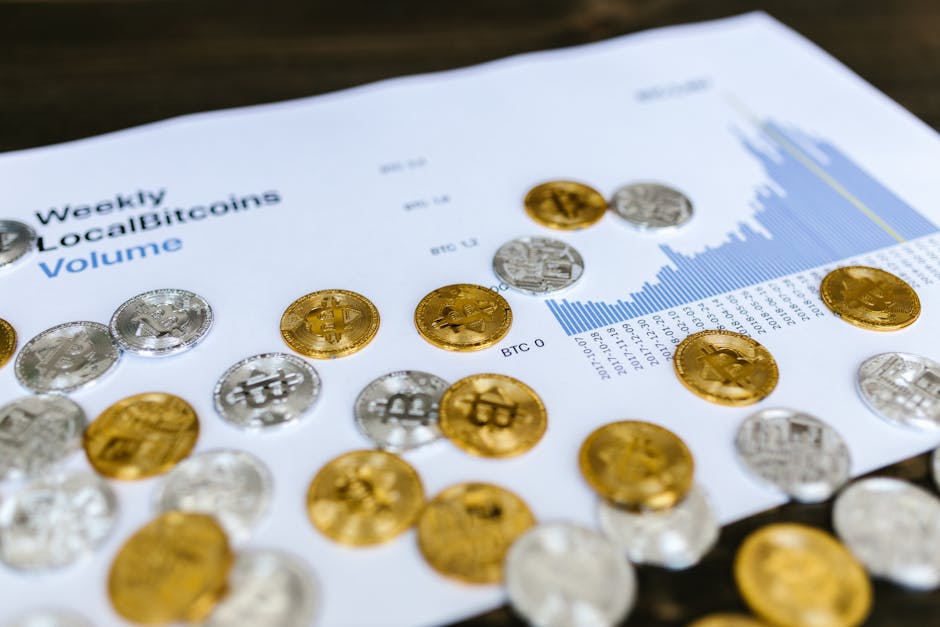
The digital asset market is currently navigating a complex intersection of speculative artificial intelligence projections and tangible institutional infrastructure developments. While sam altman ai models like ChatGPT are generating headlines with aggressive long-term price targets for assets like XRP, the immediate market reality is defined by technical consolidation and shifting regulatory landscapes. Analysts observe that while AI-driven sentiment can influence retail interest, the underlying value of major tokens remains tethered to institutional adoption cycles and macroeconomic pressures, such as rising Treasury yields and hawkish Federal Reserve signals [8] [10].
Institutional Integration and the Sam Altman OpenAI Influence
The speculative reach of sam altman openai technology has recently extended into the realm of financial forecasting. Reports indicate that ChatGPT has projected a scenario where XRP could reach $50 or more by 2027, provided a "monumental event" such as global central bank adoption occurs [10]. This altman chatgpt projection assumes that the XRP Ledger (XRPL) becomes a primary settlement layer for cross-border Central Bank Digital Currencies (CBDCs) and tokenized assets [10]. However, market analysts emphasize that such outcomes are highly speculative and rely on extraordinary geopolitical shifts that are not currently reflected in spot prices, which recently slipped below the $1.50 mark [11] [18].
Beyond the AI-generated hype, Ripple is actively expanding its institutional footprint through traditional partnerships. The company recently announced an expanded relationship with Brevan Howard, a global alternative investment manager with $35 billion in assets under management [7]. Under this agreement, Ripple Prime will provide multi-asset prime brokerage, clearing, and financing services [7]. While this move broadens Ripple's reach into Wall Street, observers note that platform adoption does not inherently guarantee increased demand for the XRP token itself, as the agreement does not specify the use of XRP for these brokerage services [7].
Technical Hurdles and Market Catalysts
The immediate outlook for XRP is framed by several upcoming technical and corporate milestones. The market is currently monitoring the expected Nasdaq debut of Evernorth under the ticker XRPN, which was recently delayed to mid-October [18] [22]. Evernorth is expected to hold a treasury of 473 million XRP, providing a regulated vehicle for institutional exposure [18]. Additionally, two significant XRPL upgrades—PermissionDelegationV1_1 and BatchV1_1—are slated for activation, potentially improving institutional workflows for tokenized assets [22]. Despite these catalysts, XRP remains confined to a consolidation range between $1.40 and $1.56, with buyers struggling to reclaim the $1.55 resistance level [2] [22].
Sam Altman Investments and the Broader Infrastructure Shift
The influence of sam altman investments in the AI sector is also creating a secondary narrative for the broader crypto market. Prominent figures like Arthur Hayes have analyzed the massive financial influx into artificial intelligence systems. They suggest this multitrillion-dollar expansion may necessitate a credit-fueled bailout. Such a scenario would likely inject significant liquidity into the Bitcoin market [13]. Hayes argues that if the massive spending on data centers—estimated to reach up to $10.3 trillion by 2032—triggers a financial bailout, the resulting excess liquidity could flow into crypto assets [13]. This macro framework views Bitcoin as a primary beneficiary of potential AI-related credit stress in late 2027 or 2028 [13].
In the interim, Bitcoin faces more immediate pressure from traditional financial factors. The asset recently fell below $83,000 following hawkish FOMC minutes and rising 10-year Treasury yields, which approached 5.34% [8]. This risk-off sentiment was exacerbated by a "flash crash" where leveraged liquidations totaled over $400 million in a single hour [13] [19]. Technical data suggests that Bitcoin needs to reclaim the $84,200 level to stabilize its near-term structure, with major support now sitting near $81,000 [8].
Network Upgrades and Regulatory Evolution
While AI models predict future prices, blockchain networks are focusing on functional upgrades to attract institutional capital. Ethereum is currently testing its "Glamsterdam" upgrade on the Sepolia testnet, which has successfully raised the block-gas limit to 200 million [6]. This rehearsal is designed to assess the network's capacity for higher transaction volumes, though early results show that actual usage remains well below the new ceiling [6]. Simultaneously, the Cardano Foundation has launched the CIP-0113 standard on its mainnet, allowing issuers of regulated stablecoins and bonds to embed transfer controls and identity checks directly into token logic [17].
These technical advancements coincide with a tightening regulatory environment, particularly in the UK. The region is moving toward a more data-intensive crypto tax regime, with the Cryptoasset Reporting Framework (CARF) set to begin automatic information sharing across 52 jurisdictions by 2027 [3]. This shift aims to increase transparency for offshore holdings, though it has raised concerns regarding user privacy and the potential for increased phishing risks [3].
What to watch next: Investors should monitor the successful closing of the Evernorth merger and its subsequent Nasdaq trading debut, as this will serve as a litmus test for institutional appetite for XRP-linked equities [18]. Additionally, the response of Bitcoin to the $81,000 support level amid ongoing energy inflation and Treasury yield volatility will likely dictate the broader market's direction heading into the final quarter of the year [8] [19].