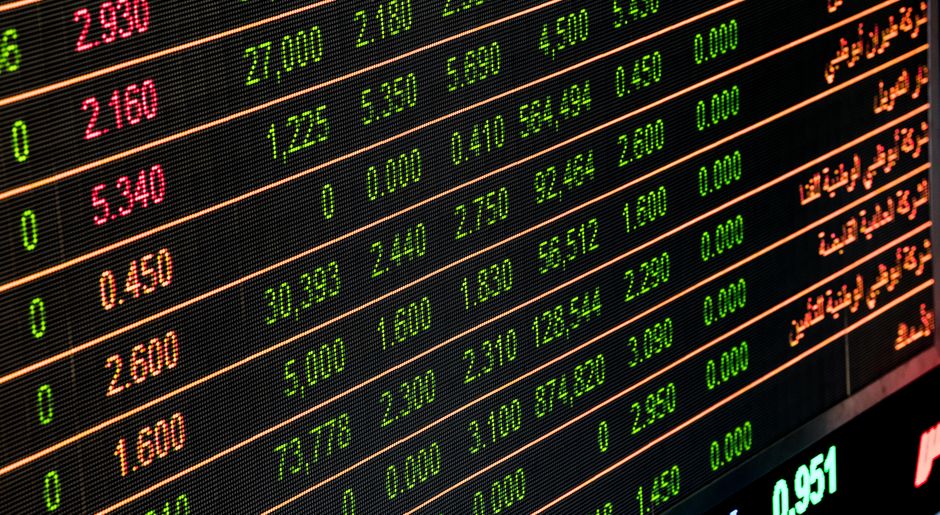
The stock market today is navigating a complex landscape of recovery and caution as global equities attempt to build on a significant rebound from recent volatility. While major indices surged during Monday’s session, the momentum has carried into Asian trading, supported by a sharp decline in crude oil prices and a renewed appetite for semiconductor shares [1] [2]. However, the rally faces immediate tests from upcoming inflation data and a high-profile investigation involving the leadership of the world’s most prominent artificial intelligence chipmaker [5] [12]. Analysts observe that while the broader market sentiment has shifted toward a more optimistic tone, the underlying risks of persistent inflation and geopolitical instability remain central to institutional decision-making [1] [4].
Dow Jones Today: Markets Rally as Energy Costs Retreat
The dow jones today and other major U.S. benchmarks opened the week with substantial gains, largely driven by a retreat in energy prices that eased immediate inflation concerns [12]. The Dow Jones Industrial Average advanced 597 points, while the S&P 500 and the nasdaq today rose 1.16% and 1.43%, respectively, at the start of the week [12]. This upward movement followed a period of intense selling pressure, suggesting that many investors viewed the previous week's dip as an entry point [2] [10]. Market data indicates that the wall street recovery was further bolstered by comments from President Donald Trump, who signaled a potential pause in military escalations involving Iran [1] [5].
Crude oil futures responded sharply to these geopolitical signals. Brent crude fell approximately 5.85% to settle near $92.80 a barrel, while West Texas Intermediate (WTI) dropped 4.38% to around $85.91 [1] [5]. This decline represents a significant relief for energy-importing economies, particularly in Asia, where the lower cost of fuel is expected to dampen regional inflationary pressures [1]. Consequently, the stock market news from Asian exchanges on Tuesday was overwhelmingly positive; Japan’s Nikkei 225 climbed between 2.6% and 2.9%, and South Korea’s KOSPI surged over 5% in early trading before settling at a 4.52% gain [1] [2].
Semiconductor Sector Divergence and the Nvidia Investigation
The technology sector, which has been the primary engine of market growth throughout 2026, experienced a notable divergence in performance. While the Philadelphia Semiconductor Index gained more than 5% on Monday, individual stocks reacted differently to company-specific developments [10] [12]. Advanced Micro Devices (AMD) saw its shares climb 13% after receiving a brokerage upgrade and benefiting from increased demand for its data center processors [1] [13]. Broadcom also experienced a significant rebound, jumping 12% from its monthly lows as investors rotated back into artificial intelligence infrastructure providers [8] [10].
Leadership Scrutiny at Nvidia
In contrast to the broader sector rally, Nvidia shares faced downward pressure, dropping between 4.27% and 6.5% during recent sessions [1] [12]. The decline followed an announcement from Nvidia’s board regarding an independent investigation into reports that CEO Jensen Huang had been the target of a foreign intelligence operation [3] [5]. Huang acknowledged personal infidelity in a message to employees, though the company stated it has no reason to believe that confidential information or national security secrets were compromised [3] [17]. Despite the board's expression of confidence in Huang’s leadership, the controversy has attracted political attention, with U.S. House committee chairs requesting a briefing on the matter [17].
Market participants are also monitoring synthetic markets for clues on sentiment. On the crypto exchange Hyperliquid, a trader reportedly placed a $5.44 million leveraged short position against Nvidia using 10x leverage [19] [21]. This move highlights how 24/7 digital asset platforms are increasingly used to trade traditional equity exposure outside of standard wall street hours [21]. While some analysts maintain a "Buy" rating on Nvidia, citing attractive risk/reward levels after the recent sell-off, others have downgraded the stock to "Hold," pointing to surging financial commitments and potential internal turmoil [16].
Federal Reserve Warnings and the Path for Interest Rates
Despite the current bullish undercurrent, Federal Reserve officials have issued warnings that could temper long-term enthusiasm. Chicago Fed President Austan Goolsbee noted that the rapid expansion of AI data centers is beginning to resemble "old-fashioned demand overheating," which may require a more aggressive monetary response [4]. Richmond Fed President Tom Barkin echoed these concerns, describing price pressures as stubbornly elevated and suggesting that further interest rate increases might be necessary to bring inflation back to the 2% target [4].
The stock market today remains highly sensitive to these policy signals. Following a stronger-than-expected October jobs report, market probability for a December interest rate hike has risen to approximately 84.5% [5] [12]. Investors are now pivoting their focus toward the upcoming Consumer Price Index (CPI) and Producer Price Index (PPI) reports [1] [12]. A higher-than-anticipated inflation reading could potentially derail the current recovery, while a cooling trend would likely bolster hopes for a pause in the central bank's tightening cycle [1].
In the corporate sphere, other tech giants are moving to capitalize on the shifting landscape. Alphabet shares rose 1.93% after Google introduced new versions of its in-house AI chips, the TPU 8tx and TPU 8i Max, which are designed to challenge Nvidia’s market dominance by offering secure computing at a lower cost [6] [14]. Additionally, cloud infrastructure provider CoreWeave reported a new multi-year agreement with autonomous-driving developer Wayve, though the company’s high interest expenses remain a point of scrutiny for analysts ahead of its quarterly earnings report [9].
What to Watch Next
The immediate trajectory of the stock market today will likely be determined by the U.S. CPI data release, which serves as a critical barometer for the Federal Reserve's December meeting [1] [12]. Investors will also closely monitor the November 17 earnings report from Nvidia and the scheduled congressional briefing on November 18 regarding the investigation into Jensen Huang [5] [17]. Furthermore, any shifts in the geopolitical climate between the U.S. and Iran will continue to influence crude oil volatility, which remains a primary driver of global inflation expectations and equity valuations [1] [5].